Do Septic Tank Treatments Work?
A healthy septic tank already gets the bacteria it needs from household waste, and no product replaces regular pumping. Still, many owners choose a monthly treatment as an easy maintenance habit. If you do, pick one with a clear monthly routine, a stated bacteria count and a refund window, and keep your pumping schedule.
Some links on this page are affiliate links: if you buy through them, we may earn a commission at no extra cost to you. Details
Septifix: Monthly flush-in septic tank tablets that the maker says release oxygen and add live aerobic bacteria.
Check Septifix on the official site60-day money-back guarantee
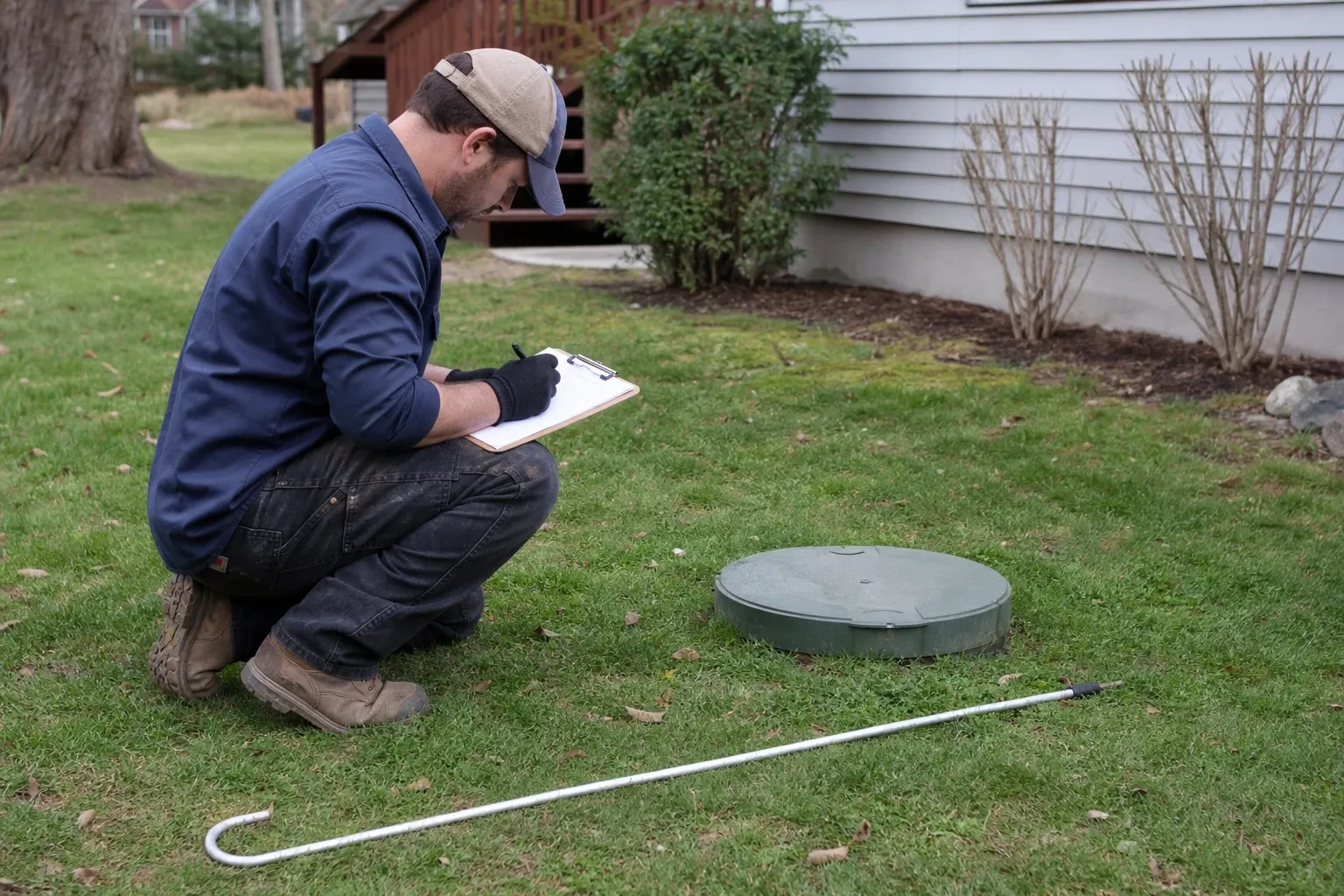
In this guide
- Do septic tank treatments actually work?
- What does pumping do that no additive can?
- Which additives and household products can hurt your tank?
- Liquid, powder or tablets: which format is better?
- When can a monthly treatment still make sense?
- What does Septifix say it does, and how often do you use it?
- Septic care checklist between pumpings
- Compare treatment types side by side
Do septic tank treatments actually work?
A healthy tank already gets the bacteria it needs, and no septic tank treatment replaces pumping. That said, many owners like a monthly treatment as a simple maintenance habit. Picture this: a mailer promises that one tablet a month takes care of your tank. Your neighbor just paid for a pumping. Who’s right?
Your neighbor, on pumping. If you’re new to how tanks work, our septic system basics guide walks through every part.
What the EPA says
The EPA’s guidance on septic tank additives does not recommend bacterial or chemical additives for household septic systems. It says research backing them is limited, and that some products can harm the system, including the drain field (the buried pipes and soil that clean the wastewater), or the environment. No additive fixes a system that is badly designed, overloaded or failing.
Independent testing of named brands is thin, so read big label promises as the maker’s promise.
Why a healthy tank already has its own bacteria
A working septic tank gets its bacteria from what you flush every day. Those bacteria break down part of the solids on their own.
That’s why “starter” products are usually optional. Everyday habits like using water wisely, flushing only waste and toilet paper, and pumping on schedule do the real work.
What does pumping do that no additive can?
Pumping physically removes the solids that bacteria can’t fully break down. No treatment does that.
Sludge and scum explained
Sludge is the heavy layer that sinks to the bottom of the tank. Scum is the layer of grease and oils that floats on top. The liquid in between, called effluent, flows out to the drain field.
Bacteria shrink these layers a bit, but they keep building. If they get too thick, solids can slip out with the effluent and clog the drain field. That’s the expensive part to fix.
How often to pump and how long tanks last
The EPA’s guide to caring for your septic system suggests most homes need pumping every three to five years, but your tank size and household size change that. Always follow your local health department or septic pro.
| Situation | Rough pumping pattern |
|---|---|
| 1 to 2 people, average tank | Often toward the longer end of 3 to 5 years |
| Family of 4 or more | Often toward the shorter end |
| Small tank, such as 1000 litres (about 264 gallons) | Usually more often, sometimes every year or two |
| Garbage disposal or heavy laundry | More often than average |
With good care, tanks and systems often last for decades. The drain field usually wears out first, and protecting it is the main reason pumping matters.
Quick tip: Ask your pumper to measure the sludge and scum layers each visit. That tells you whether your schedule is right.
How the costs compare
Pumping costs vary a lot by region, so get local quotes. As a rough order:
- Monthly treatment: a small recurring cost, optional.
- Pumping: a larger bill every few years, essential.
- Drain field repair or replacement: usually far more than years of pumping.
Skipping pumping to save money tends to push you toward that last line.
Which additives and household products can hurt your tank?
Harsh chemical additives, strong drain cleaner and large amounts of bleach are the products most likely to hurt your septic tank. Most everyday items are fine in normal amounts.
Yeast, baking soda and vinegar
Yeast and baking soda are old home remedies that don’t do much in a septic tank. Yeast isn’t the right kind of microbe for the job. Baking soda can nudge the pH level (how acidic or alkaline the water is), but your tank doesn’t need help there.
Can you pour vinegar down your drains? An occasional cleaning splash is low risk. It just isn’t a treatment.
Drain cleaners, bleach and chemical additives
Strong drain cleaner and some chemical additives can kill the bacteria your tank relies on. Some can also stir up solids so they wash into the drain field.
For clogs, try a plunger or a drain snake first. Bleach in normal laundry amounts is generally fine. Gallons of it are not.
Is Dawn dish soap okay?
Yes, Dawn and other ordinary dish soaps are generally fine in normal household amounts. The bigger problem is the grease you wash off the dishes. Wipe greasy pans with a paper towel before washing.
Liquid, powder or tablets: which format is better?
No format is clearly better. The format mostly changes convenience.
Biological additives versus enzymes versus chemical products
Products fall into three broad groups:
- Biological additives contain live bacteria. Makers say they boost the tank’s own bacteria.
- Enzymes are proteins that speed up breakdown of things like grease or paper. Makers say they help bacteria work faster.
- Chemical products use strong compounds such as lye or solvents. Some oxygen products use milder ingredients like hydrogen peroxide.
Many brands, such as Rid-X, mix bacteria and enzymes.
Pods, liquid and powder compared
| Format | How you add it | Dosing | Storage | Good for |
|---|---|---|---|---|
| Liquid | Pour into toilet or drain | Measure each time | Bulky bottle, can spill | People who like flexible doses |
| Powder | Pour into toilet and flush | Measure or pre-portioned | Keep dry | Lower cost per dose in many brands |
| Pods or tablets | Drop in toilet and flush | Pre-measured | Small, tidy | Set-and-forget routines |
So, liquid or powder Rid-X? Pick the one you’ll actually use on schedule. For brand details, see our Rid-X vs Green Gobbler comparison, and for tablet options, our septic tank tablets guide.
When can a monthly treatment still make sense?
A monthly septic treatment can make sense as an easy maintenance habit, as long as you keep pumping on schedule.
Who might choose one
Many owners pick a treatment for peace of mind in situations like these:
- A vacation home that sits empty for weeks.
- Someone in the house is taking antibiotics.
- Heavy laundry or lots of cleaning products.
- You simply like a monthly routine that reminds you to check on the system.
How to pick one
If you decide a treatment fits your home, look for:
- A simple monthly routine. Pre-measured tablets or pods make it easy to stay on schedule.
- A stated bacteria count or strain list. A label that says what’s inside is easier to judge than vague promises.
- A refund window. A money-back period lets you try it with less risk.
- No harsh chemicals. Skip products built on lye or solvents.
- Your pumping schedule stays. Treat any product as a step between pumpings.
When an additive is the wrong answer
An additive is the wrong answer when the system shows signs of trouble. Call a licensed septic professional if you notice:
- Slow drains in several fixtures
- Gurgling pipes
- A sewage odor indoors or in the yard
- Wet, soggy or extra-green patches over the drain field
- Sewage backing up into the house
These can mean a full tank, a broken baffle, a crushed pipe or a failing field. No product fixes those.
What does Septifix say it does, and how often do you use it?
Septifix is a monthly tablet that the maker says adds oxygen and live aerobic bacteria to your tank. It fits as an optional routine step, not a replacement for pumping.
What the maker says
The maker says each tablet contains 14 strains of live aerobic bacteria (bacteria that use oxygen) plus an oxygen-releasing compound. The maker says the oxygen reacts with hydrogen sulfide, the gas behind rotten-egg smells, to cut odor. It also lists sodium carbonate and pH-regulating compounds, but no full ingredient list is given.
The maker hasn’t published named, independent test results for Septifix. Its bigger claims, like cutting the need for pumping, are the maker’s own, so keep pumping either way.
How to dose it
The maker’s dosing is simple:
- Flush 3 tablets to start.
- Flush 1 tablet each month after that.
- Pick a fixed date, like the first of the month.
- Keep your normal pumping and inspection schedule.
Price, guarantee and where it is sold
The maker says Septifix is sold only on its website through ClickBank. Listed prices are $69 for a 6-month supply plus shipping, $118 for 12 months, and $147 for 18 months, both with free shipping. The maker offers a 60-day money-back guarantee. Prices change, so check the sales page.
Who should skip it
Skip Septifix, or any treatment, if you have active back-ups, a soggy drain field or a tank overdue for pumping. Call a pro first. Our full Septifix review covers more detail.
We may earn a commission if you buy through our link, at no extra cost to you. If you want an easy monthly habit, check the current Septifix offer and the 60-day refund terms on the official site.
Check Septifix on the official site60-day money-back guarantee
Septic care checklist between pumpings
A simple septic care checklist keeps your tank on track. Print it and stick it inside a cabinet door.
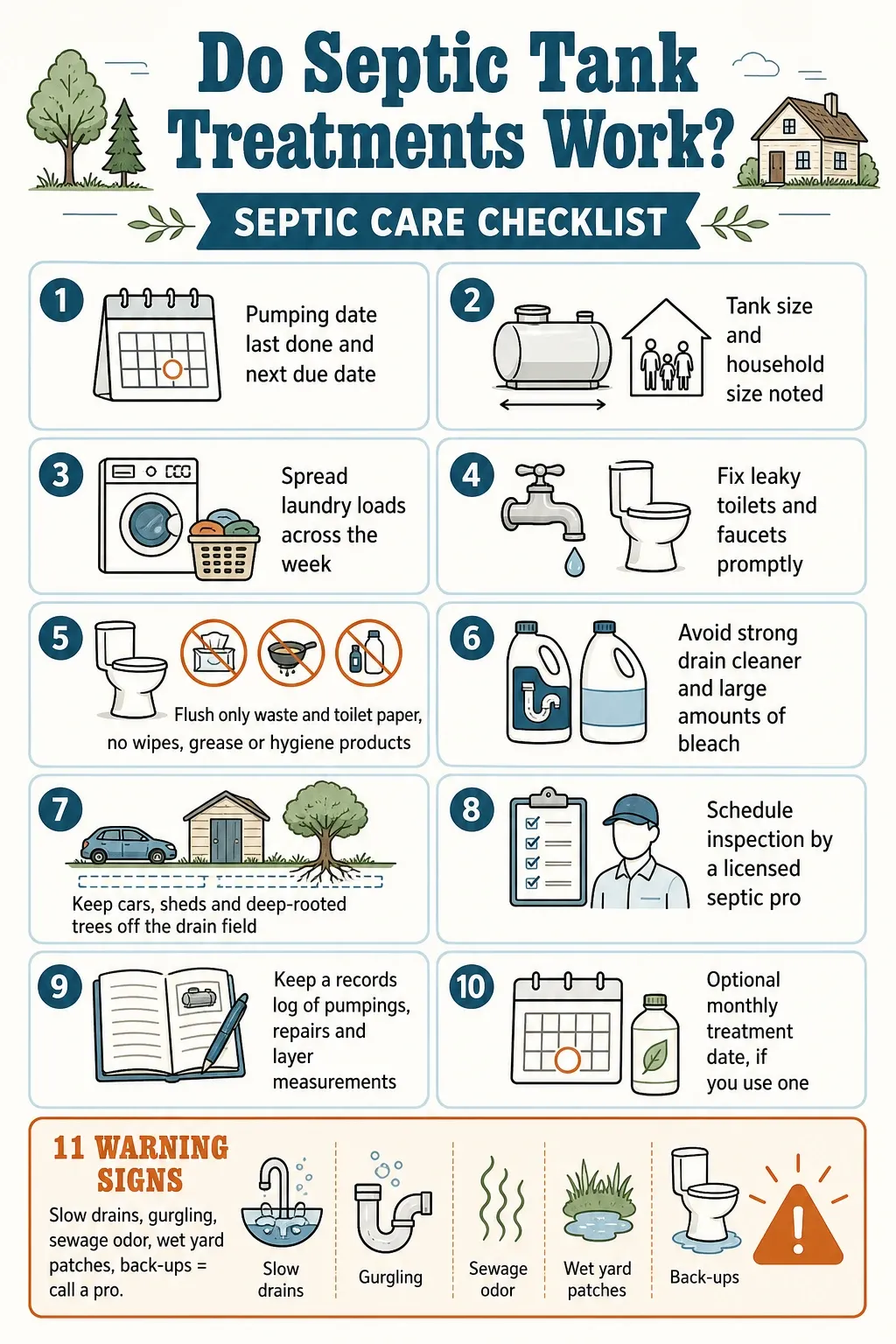
If any warning sign shows up, skip the product aisle and call a licensed septic professional. Catching a problem early is usually much cheaper than fixing a failed drain field.
Compare treatment types side by side
If you’ve decided a treatment fits your routine, the next step is choosing a type. Our guide to every septic tank treatment type compared lays out bacteria, enzyme and oxygen products, with what each maker says and who each suits. It’s the easiest place to narrow your choice before you buy anything, and it keeps pumping where it belongs: first on the list.
Common questions
Are septic tank additives necessary?
For most homes, no. A healthy septic tank gets the bacteria it needs from normal household waste, and the EPA does not recommend additives for household systems. Many owners still use a monthly treatment as an easy habit. Regular pumping, careful water use and flushing only waste and toilet paper matter most.
Can a treatment reduce septic smell?
Some makers say their products reduce odor, but a strong or lasting septic smell often points to a full tank, a dry plumbing trap, a vent problem or a failing drain field. Check traps and vents first, then call a licensed septic professional if the smell stays or comes from the yard.
Can I skip pumping if I use a treatment?
No. Every septic tank collects sludge and scum that bacteria cannot fully break down, whatever treatment you add. Only pumping removes them. Skipping it risks solids reaching the drain field, which is usually the costliest part to repair. Keep your pumping schedule even if you use a monthly product.