Septic Tank Enzymes: How They Differ From Bacteria Products
Septic tank enzymes are proteins that speed up the breakdown of fat, starch, protein and paper. Bacteria products add live microbes that make their own enzymes. Both are optional extras. Pumping on schedule still matters either way. Our top pick for an easy monthly routine is Septifix, a flush-once-a-month live bacteria tablet with a 60-day refund window.
Some links on this page are affiliate links: if you buy through them, we may earn a commission at no extra cost to you. Details
In this guide
- Quick picks
- Enzymes vs bacteria: which is the better septic treatment?
- What septic tank enzymes actually are and do
- Enzyme and bacteria treatments compared
- What do septic pros say about treatments?
- Can you use enzyme cleaner with a septic tank, and what to avoid?
- How to dose a treatment and check it worked
- How long does a tank last and when to pump instead of treat?
- Comparing more septic treatment types
- Where a monthly live bacteria tablet fits
Quick picks
Septifix is our top pick for most homeowners who want a simple monthly bacteria treatment alongside regular pumping. Say you just had the tank pumped, or you’ve used a lot of bleach while someone was sick, and you want an easy routine going forward. Here’s how the options line up.
Our top pick: Septifix. It’s a monthly live bacteria tablet, not a liquid or a powder. It’s the easy all-round option for the same goal.
- Flush-and-forget format: one tablet down the toilet each month after a starting dose.
- A stated bacteria count: the maker says it contains 14 strains and over 10 billion bacteria per gram.
- Low-risk to try: a 60-day money-back guarantee, and the 18-month supply is $147 with free shipping.
Check the current Septifix bundle prices and the 60-day refund terms on the official site.
Check Septifix on the official site60-day money-back guarantee
- Green Gobbler Industrial Septic Saver Pods: best for a small upfront spend ($17.99 for a 4-month supply).
- EcoStrong Septic Tank Treatment Liquid: a liquid option, but it was listed as sold out when we checked.
- Bio-Clean: best powder blend of bacteria and enzymes.
- Earthworm Septic Waste Eliminator: best if you want lipase and cellulase enzymes named on the label.
Enzymes vs bacteria: which is the better septic treatment?
Live bacteria treatments suit restocking after pumping or heavy chemical use, while enzyme-only products give a short, targeted boost. Combined formulas sit in the middle and are the most common type on store shelves.
Here’s a simple way to pick:
- Tank healthy and pumped on schedule? You can skip additives entirely.
- Just pumped, or after weeks of bleach or antibiotics? A live bacteria product is the logical choice.
- Want a one-off boost for grease or paper? An enzyme product targets that.
- Want both in one? Choose a bacteria-and-enzyme blend.
Whatever you choose, keep pumping on schedule. No additive takes the place of having a licensed septic pro empty and inspect the tank.
Quick tip: Write your last pumping date on the tank lid map or in your phone. It’s the single most useful septic record you can keep.
What septic tank enzymes actually are and do
Septic tank enzymes are proteins that speed up chemical breakdown of waste, and they’re made by bacteria. Unlike bacteria, enzymes don’t eat, grow or multiply. Once they’ve done their job, they’re used up.
Your tank has three layers. Scum floats on top (grease and light solids). Sludge settles on the bottom (heavy solids). In the middle is effluent, the partly cleaned liquid that flows out to the drain field. Some sludge never breaks down, which is why it has to be pumped out, not dissolved.
Cellulase, protease, lipase and amylase: what each targets
Each septic enzyme works on one type of waste.
| Enzyme | Breaks down | Common source |
|---|---|---|
| Cellulase | Paper and plant fiber | Toilet paper |
| Protease | Protein | Food scraps, body waste |
| Lipase | Fats, oils, grease | Cooking grease, soaps |
| Amylase | Starch | Pasta, rice, potatoes |
Enzymes versus the bacteria already in your tank
A working septic tank already has its own bacteria, and they make these enzymes naturally. Every flush brings in more. Our guide to bacteria for septic systems covers this tank ecosystem in more detail.
Enzyme and bacteria treatments compared
Enzyme and bacteria treatments work differently, though makers describe similar goals.
| Enzyme-only | Live bacteria | Blend | |
|---|---|---|---|
| How it works | Speeds breakdown, then is spent | Adds microbes that make enzymes | Both at once |
| What makers claim | Breaks down grease, paper | Restores tank balance, less odor | Faster breakdown plus restocking |
| Best use | One-off grease or paper boost | After pumping or chemicals | General monthly routine |
Here are the products side by side, using only what each seller publishes.
| Product | Format | What’s in it | Price | Guarantee |
|---|---|---|---|---|
| Septifix | 55 g tablet, flushed | Live aerobic bacteria, oxygen-releasing compound, sodium carbonate, pH regulators | $147 for 18 months (about $8.17/month); $118 for 12; $69 for 6 | 60-day money back |
| Green Gobbler Septic Saver Pods | Flushable pod | Natural digestive bacteria | $17.99 for 4 months (about $4.50/month) | 30-day money back |
| EcoStrong Liquid | 1 gallon liquid | Water, bio-surfactant, enzyme-producing bacteria, lavender fragrance | $29.97 per gallon; monthly dose not stated | 60-day money back |
| Bio-Clean | Powder | Natural bacteria and enzymes | $78 per 12-packet pack | Not stated |
| Earthworm Septic Waste Eliminator | Not stated | Bacterial cultures, lipase, cellulase | $44.95; size not stated | Not stated |
Pros and cons of each type
Enzymes
- Pro: target a specific waste, like grease.
- Con: don’t multiply, so the effect is short-lived.
Live bacteria
- Pro: can keep working and growing in the tank.
- Con: bleach and antibacterial products can knock them back.
Blends
- Pro: cover both jobs in one dose.
- Con: usually cost more per dose.
How to read CFU counts and strain lists
A CFU count (colony-forming units, a measure of live microbes) tells you how many bacteria are in the pack. It’s label information, not a performance result, and a bigger number on its own doesn’t tell you how well a product works. A listed number of strains is more useful than none.
If a simple monthly tablet sounds like your kind of routine, you can see the current Septifix offer and refund terms here.
Check Septifix on the official site60-day money-back guarantee
What do septic pros say about treatments?
If you want the full picture on whether treatments earn their place, our guide on whether septic tank treatments work covers it. Rules vary by area, and some permits spell out what can go into a system, so check with your local health department or permit office if you have a newer or permitted system.
The rule nearly every pro agrees on: pumping on schedule comes first. A typical household tank is often pumped every three to five years, with an inspection along the way. Ask your septic pro what interval fits your tank size and household.
Can you use enzyme cleaner with a septic tank, and what to avoid?
Septic-safe enzyme cleaners are generally fine to use with a septic tank. The products to avoid are harsh chemical treatments and drain openers.
Bleach, antibacterial products and antibiotics
Heavy bleach, disinfectant use or a course of antibiotics can knock back tank bacteria. Normal laundry amounts are usually fine. After a heavy stretch, wait a few days, then dose a bacteria product as the label directs.
Drain cleaners and flushing rules
Chemical drain cleaners can harm tank bacteria and old pipes. Use a plunger or drain snake first. Flush only toilet paper and body waste. Keep out:
- Wipes, even ones labeled flushable
- Grease and cooking oil
- Paint, solvents and medicines
- Diapers, cat litter and feminine products
This protects the drain field, or soakaway, which is the most costly part to replace.
Package treatment plants and mechanical systems
Package treatment plants and aerobic systems have pumps and air supplies that can react to additives. Check with the system’s manufacturer or your service provider before adding anything.
How to dose a treatment and check it worked
Septic tank enzyme treatment dosing follows the product label, usually once a month, flushed or poured down a toilet.
Step-by-step dosing
- Read the label for your tank size.
- Pick a quiet time, like bedtime, so the dose sits before heavy water use.
- Flush tablets or pods; mix powders with warm water if the label says so.
- Note the date so you stay on schedule.
The best times to start are right after pumping or after heavy cleaning chemical use.
Tank size and dose
Most products are sized for a typical home tank of about 1,000 gallons. Larger tanks may need more, so follow the label or ask the seller.
What to watch for afterwards
Keep an eye on smell, drain speed and gurgling. At the next pumping, ask your pro how deep the sludge and scum layers were. Stop and call a licensed septic pro right away for clogs and backups, sewage in the house or soggy ground over the drain field.
How long does a tank last and when to pump instead of treat?
A 1,000 litre septic tank (about 264 gallons) serves a very small household and usually needs pumping more often than a larger tank, often every year to every few years.
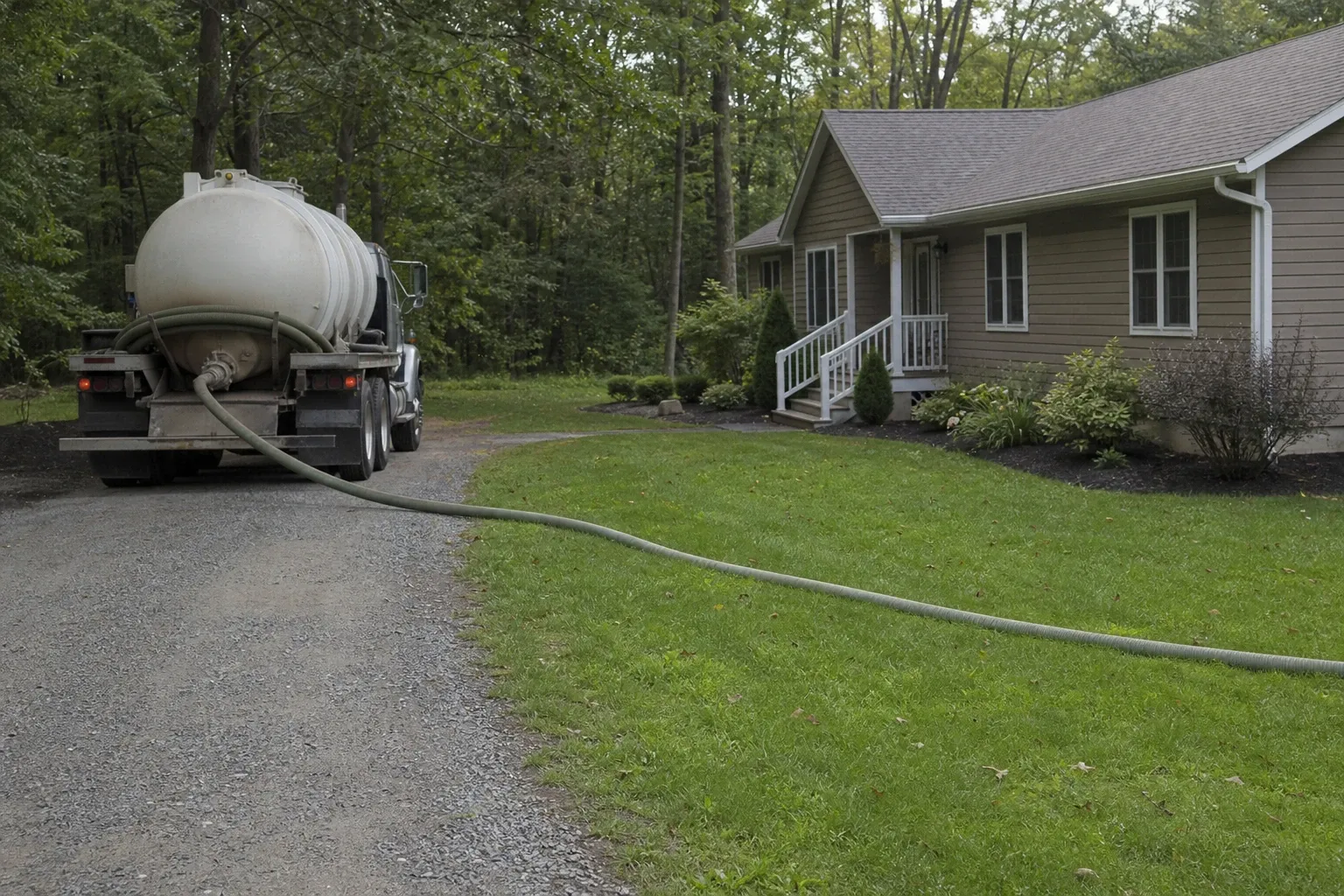
The tank itself can last decades with care, especially concrete or plastic tanks that are pumped on schedule. The drain field is usually the weak point. Once solids escape into it, repairs get expensive.
Pump instead of treat when you notice:
- Slow drains throughout the house
- Sewage odors indoors or in the yard
- Gurgling pipes
- Backups or standing water over the field
These signs mean the tank needs a pro, not an additive. For a fuller picture of how each part works, see our septic system basics.
Comparing more septic treatment types
Septic tank enzymes are one of several treatment types, and our main guide to septic tank treatment compares them all side by side, from tablets to liquids to pods. If you’re weighing whether to buy anything at all, our page on septic tank additives covers what to check first. And for a closer look at our top pick’s ingredients, costs and who it suits, read our full Septifix review.
Where a monthly live bacteria tablet fits
Septifix is an oxygen-releasing live bacteria tablet you flush once a month, and it’s our top pick for owners who want a simple routine alongside pumping. We earn a commission if you buy through our links, at no extra cost to you.
Septifix
A 55 gram tablet with live aerobic bacteria and an oxygen-releasing compound. The maker says it helps break down toilet paper, oils, grease and soaps and that the oxygen helps tackle smells.
Pros
- Monthly flush, nothing to measure or mix
- The maker states 14 strains and over 10 billion bacteria per gram
- 60-day money-back guarantee
- 18-month supply $147 with free shipping
Cons
- The 6-month supply ($69) adds shipping
- No full ingredient list is given
- Sold only on the official site
- The maker hasn’t published independent test results for Septifix
See the current Septifix bundles and refund terms on the official site.
Check Septifix on the official site60-day money-back guarantee
Green Gobbler Industrial Septic Saver Pods
Monthly flushable pods with natural digestive bacteria. Lowest upfront cost at $17.99 for four months, with a 30-day guarantee.
EcoStrong Septic Tank Treatment Liquid
A 1 gallon bacteria liquid at $29.97 with a 60-day guarantee. It was listed as sold out when we checked, and the monthly dose isn’t stated.
Bio-Clean
A powder of bacteria and enzymes, $78 per 12-packet pack. Mix with warm water first; guarantee not stated.
Earthworm Septic Waste Eliminator
Bacterial cultures plus lipase and cellulase, $44.95. Size, dose and guarantee aren’t stated.
Still deciding whether an additive is worth it at all? Our guide on whether septic tank treatments work walks you through it.
Our pick for most readers
Septifix wins on our criteria: the easiest monthly format, a stated bacteria count, a 60-day refund window and a solid 18-month bundle price. Pick Green Gobbler if you want the smallest upfront spend, or Bio-Clean if you prefer a powder with added enzymes. Keep pumping on schedule either way.
Check today’s Septifix offer and its 60-day guarantee on the official site.
Check Septifix on the official site60-day money-back guarantee
Common questions
Are septic tank enzymes safe for the drain field?
Septic-safe enzyme products are generally considered fine for the drain field because they work in the tank and don’t add harsh chemicals. The bigger risks to a drain field are grease, wipes and solids escaping from an overfull tank. Regular pumping protects the field more than any additive can.
Can I use a treatment in a new septic tank?
If your system is new, permitted or under warranty, check the installer’s guidance before adding any product, then follow the label for dosing.
Is RID-X the same as a bacteria treatment?
RID-X is a well-known septic additive sold in stores, generally marketed as a blend containing bacteria and enzymes. Check its current label for the exact ingredients. Like any additive, it’s meant to be used alongside regular pumping and inspections, not instead of them.