How to Get Rid of Septic Tank Smell Step by Step
Septic smell is usually sewer gas (hydrogen sulfide) escaping through a dry drain trap, blocked vent, loose lid, full tank or struggling drain field. Start with free checks: run water in unused drains, look at the vent and lid, walk the yard. Call a septic pro if the smell is strong, constant or comes with backups.
Some links on this page are affiliate links: if you buy through them, we may earn a commission at no extra cost to you. Details
Septifix: Monthly flush-in septic tank tablets that the maker says release oxygen and add live aerobic bacteria.
Check Septifix on the official site60-day money-back guarantee

In this guide
- What is that smell, and is it normal?
- Is the smell dangerous? Signs of sewer gas poisoning
- Step 1: Quick checks you can do today
- Step 2: Is the tank full? Signs it needs pumping
- Step 3: Can additives or dish soap help with the smell?
- Step 4: When to call a professional and what repairs cost
- How long does a septic tank last?
- Septic smell fix checklist
- Where to go from here
What is that smell, and is it normal?
A faint septic whiff now and then can be normal, but a strong or constant smell means gas is escaping where it shouldn’t. The gas is mostly hydrogen sulfide (the rotten-egg gas) plus methane, made by bacteria breaking down waste.
Picture a Tuesday morning: you step onto the back porch and the air smells like a bad egg salad. Before you panic, work out which smell it is.
Rotten egg, sewage or chemical: what each smell points to
The type of smell is a decent first clue to the cause. It isn’t a diagnosis, but it tells you where to look first.
| Smell | Most likely points to | Look first |
|---|---|---|
| Rotten egg | Sewer gas escaping: dry trap, blocked vent, loose lid | Unused drains, roof vent, riser lid |
| Raw sewage | Full tank, backup or struggling drain field | Slow drains, soggy yard, pumping history |
| Chemical or bleach | Something poured down the drain | Recent cleaners, drain openers, paint or solvents |
A light smell after heavy rain or on a windy day can be normal. A smell that sticks around is not.
Is the smell dangerous? Signs of sewer gas poisoning
At low levels, sewer gas is mostly a nuisance, but it can cause irritated eyes, headache, nausea and dizziness. Those are the first signs of sewer gas poisoning to watch for.
Hydrogen sulfide can dull your sense of smell at higher levels. So “I can’t smell it anymore” doesn’t mean it’s safe.
Leave the area and call for help if:
- People or pets feel ill while the smell is present.
- You smell it strongly near the tank or in a closed space like a basement or crawl space.
- The smell is strong and you can’t find the source.
Never open a tank or climb into one. The gas and the lack of oxygen can be deadly, and that’s a job for a licensed pro. If someone feels faint, get them to fresh air and call emergency services.
Step 1: Quick checks you can do today
The free checks fix a surprising number of smells, so start here before spending anything. Each takes a few minutes.
Smell inside the house: dry traps, toilet seals and vents
A dry P-trap is the most common indoor cause. That’s the curved pipe under a sink that holds a plug of water to block sewer gas.
- Run water for 30 seconds in rarely used sinks, tubs and floor drains.
- If one toilet smells, check for rocking or a damp floor. A faulty toilet wax ring (the seal under the toilet) lets gas up.
- Check that bathroom fans and vents aren’t pulling smells back in.
For more on indoor causes, see our guide to septic tank smell inside the house.
Smell outside: riser lid, vent pipe and yard
Outdoors, the usual suspects are a loose riser lid, a blocked vent pipe and wet ground.
- Look at the riser lid (the cover over the tank access). Gaps or cracks let gas out.
- Check the roof vent for nests, leaves or ice. A blocked vent pipe can push odor back into the house.
- Walk the drain field. Soggy ground, standing water or oddly lush grass are warning signs.
- Note the weather. Low pressure, wind and humid mornings can push odor down to ground level.
Quick tip: Write down when the smell shows up (time, weather, which room). A pro can use that.
Step 2: Is the tank full? Signs it needs pumping
A full tank often smells like raw sewage, and pumping is the fix when the tank is simply overdue. Slow drains, gurgling drains, backups, smell and a soggy yard are the common signs.
How often to pump and what pumping costs
EPA advises that most systems get inspected about every 3 years and pumped typically every 3 to 5 years, depending on tank size and how many people live there. A septic professional measures the sludge and scum layers and decides when to pump. A typical pumping often runs a few hundred dollars, and it varies by region. Ask your local pro for a quote.
A smell right after pumping is often temporary. Gas gets displaced and the tank resets.
If you don’t know when it was last pumped, check your records or ask a septic company. Our septic system basics page explains how the parts fit together.
Step 3: Can additives or dish soap help with the smell?
Additives can’t fix a full tank, a broken vent or a failed drain field, so check those first. After that, a few habits and an optional monthly product may be worth considering.
Is Dawn dish soap ok for septic systems?
Normal amounts of mild dish soap are generally fine for a septic system. Avoid heavy bleach, antibacterial products and chemical drain cleaners, which can harm the bacteria in the tank. Our page on septic-safe cleaners goes deeper.
What to put in the tank for smell
Start with habits: spread out laundry loads, skip wipes and grease, and conserve water. Those cost nothing, and EPA SepticSmart has more everyday homeowner tips.
Septifix is one option some owners consider. The maker says its oxygen-releasing tablets with live aerobic bacteria, flushed monthly, support the tank’s bacterial balance and that the oxygen reacts with hydrogen sulfide. The maker hasn’t published independent test results for Septifix, so treat it as an optional extra, not a guaranteed odor fix. Read our Septifix review for price and guarantee details. We may earn a commission if you buy through our links.
If you want to compare other options, see our septic tank smell remover roundup.
Check the current offer and the 60-day refund terms on the official site.
Check Septifix on the official site60-day money-back guarantee
Step 4: When to call a professional and what repairs cost
Call a licensed septic pro for backups, damaged vents, sewer line problems, baffle trouble or a drain field that’s failing. Ask for a septic inspection, not just pumping.
Problems that need a pro
- Blocked or damaged vent pipe
- Cracked sewer line or tree roots in the line (a sewer line blockage)
- Broken baffles (the walls that keep solids in the tank)
- Drain field failure
- Any sewage backup
Riser and lid upgrades
Risers bring the lid up to ground level and, with a sealed, watertight lid, help stop gas escaping. Prices vary, so compare quotes.
Rough ranges, which change a lot by area and site. Treat them as starting points, not quotes:
| Job | Rough range |
|---|---|
| Pumping | A few hundred dollars |
| Inspection | Often under a few hundred dollars |
| Vent pipe repair | Often low to mid hundreds |
| Riser and lid | Often a few hundred dollars and up |
| Drain field repair or replacement | Thousands of dollars |
Get at least two quotes for bigger jobs. See our drain field maintenance guide for ways to protect the field.
How long does a septic tank last?
Concrete septic tanks often last decades, commonly 20 to 40 years, and drain fields commonly last 15 to 25 years with care. Pumping on schedule and not overloading the system help both last longer.

A persistent odor in an old system can mean parts are wearing out. A pro can tell you whether it’s a repair or a replacement.
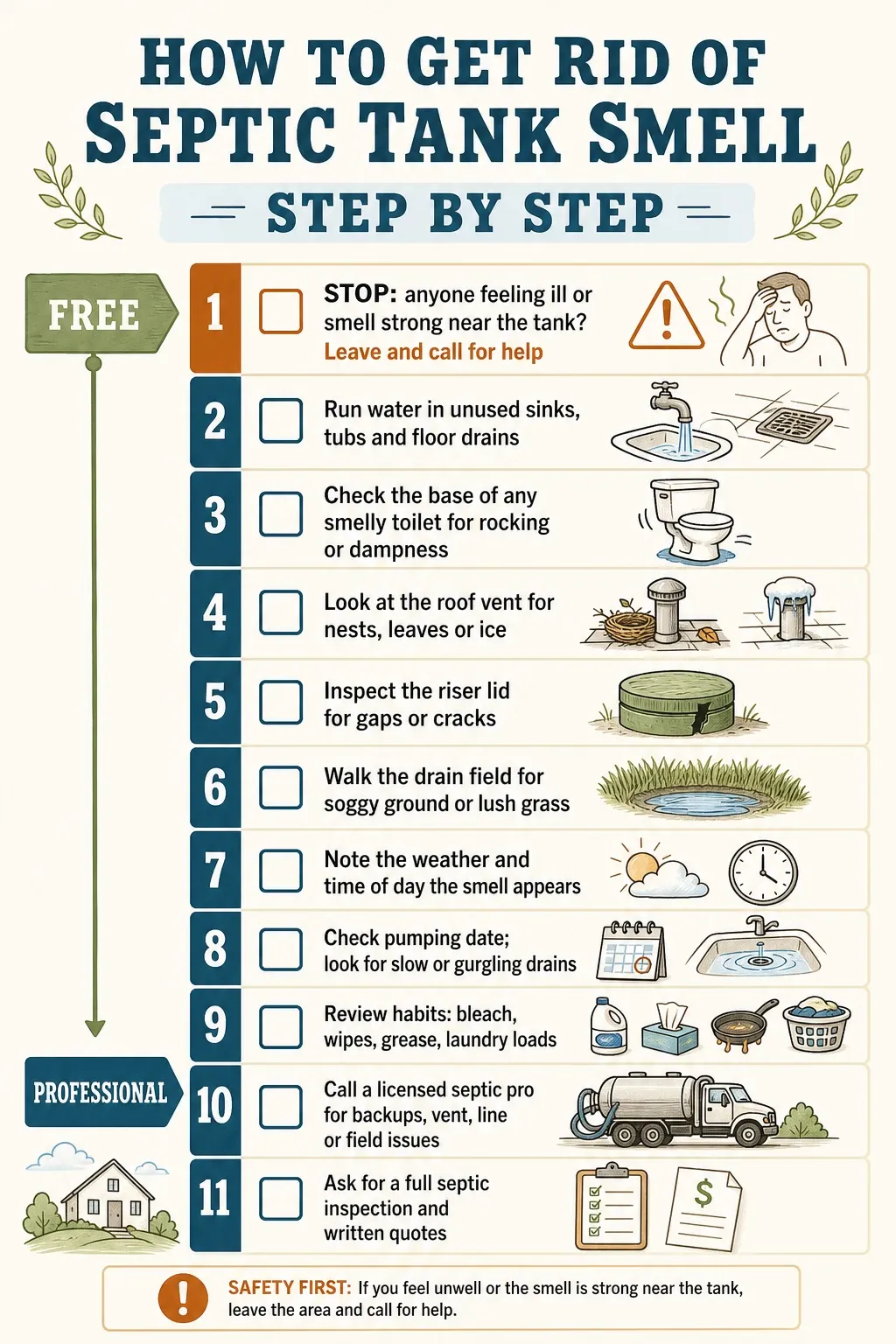
Septic smell fix checklist
Work the list from free to professional, and stop at any safety step.
Where to go from here
This step-by-step list is the quick-fix side of a bigger topic. For causes room by room, read our parent guide, Septic Tank Smell in the House: Causes and Fixes.
If you’re shopping for deodorizers or treatments, our septic tank smell remover comparison lays out the options. If the smell is strong, constant or comes with backups, book a septic inspection first.
Common questions
Why does my septic tank smell worse after rain?
Wet ground and low air pressure can hold gas near the surface, so odors drift down to ground level. Heavy rain can also saturate a drain field. A light smell may pass. If it lingers or the yard stays soggy, call a septic pro.
Can a septic smell go away on its own?
Sometimes. A dry trap that’s refilled, a windy day passing or a post-pumping reset can clear a smell. A strong or constant smell usually has a cause, like a blocked vent, loose lid or full tank, so it’s worth checking.
Why does only my bathroom smell like sewage?
One smelly bathroom usually points to something local: a dry P-trap in an unused sink or tub, a loose toilet wax ring, or a vent problem. Run water in every drain there and check the toilet base. If it persists, call a plumber.