Septic Drain Field Maintenance and Warning Signs
Protect your septic drain field by pumping the tank every 3 to 5 years, spreading out water use, keeping vehicles and deep roots off the field, and keeping grease and wipes out of the system. Soggy ground, sewage odor or backing-up drains mean it's time to call a licensed pro.
Some links on this page are affiliate links: if you buy through them, we may earn a commission at no extra cost to you. Details
Septifix: Monthly flush-in septic tank tablets that the maker says release oxygen and add live aerobic bacteria.
Check Septifix on the official site60-day money-back guarantee

In this guide
- What does a septic drain field do, and why does it fail?
- How long is a drain field supposed to last?
- When should you pump the septic tank to protect the drain field?
- What should you do, and avoid, to keep the field healthy?
- What are the warning signs your drain field is in trouble?
- Can a failing drain field be repaired, and when is it a pro job?
- Drain field maintenance checklist
- Where this fits in your septic care
You notice one patch of lawn stays soggy, even in a dry week. Maybe there’s a faint sewage smell by the yard too. That’s often the first hint your drain field needs attention.
What does a septic drain field do, and why does it fail?
A septic drain field is the part of your system that spreads tank water into the soil, where it gets its final cleaning. It’s also called a leach field.
How the field cleans wastewater
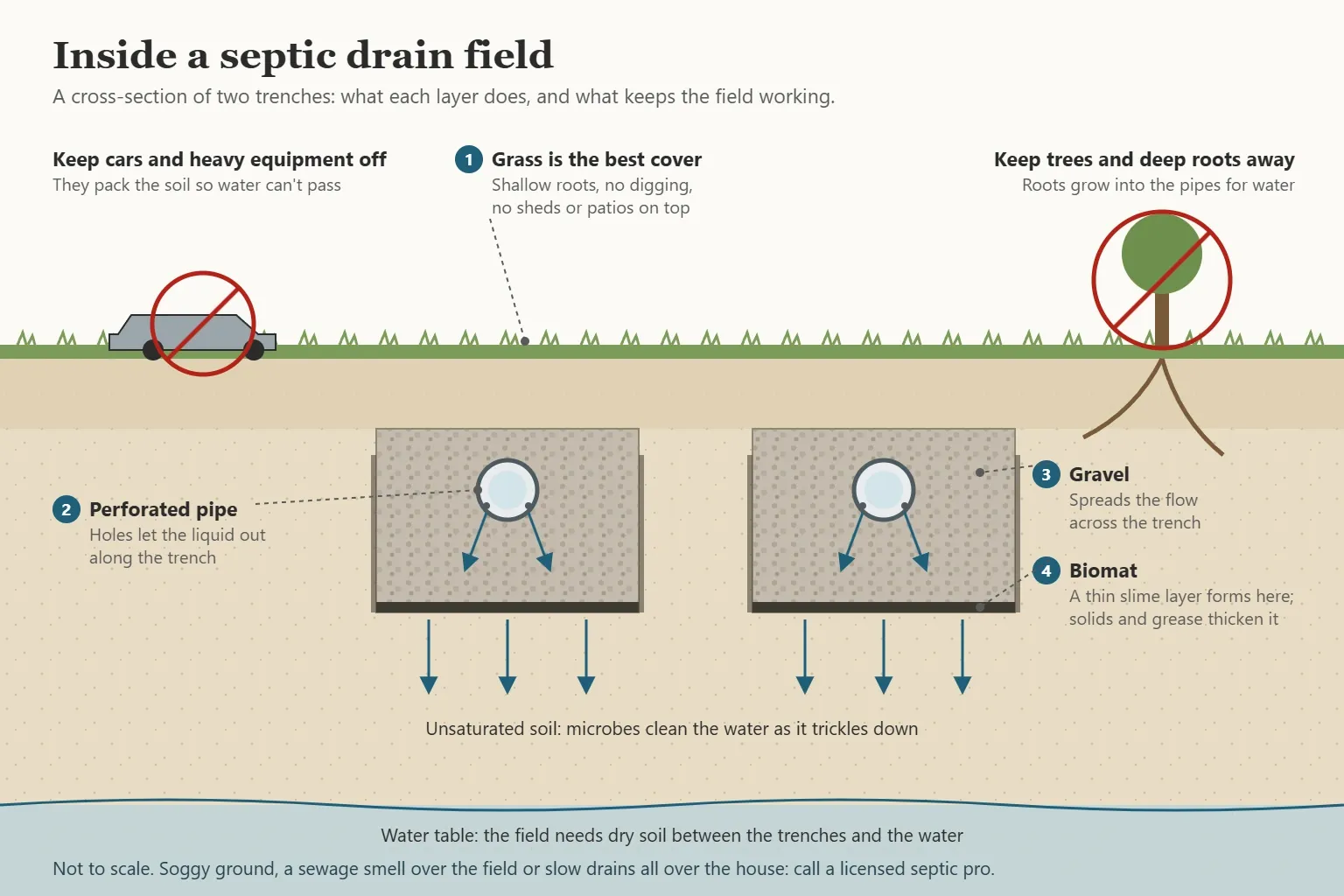
The drain field moves liquid (effluent) from the septic tank through perforated pipes, called leach lines, laid in gravel trenches. The liquid seeps down into the soil, and tiny microbes there finish the cleanup.
Think of the soil as a slow coffee filter. It works well when water trickles through. Clog it with solids and the water has nowhere to go.
Common causes of failure
Most failures come from a handful of causes:
- Solids from skipped pumping. They slip past the tank and clog the soil.
- Hydraulic overload. That’s too much water too fast, like running many laundry loads back to back.
- Tree roots. They grow into pipes looking for moisture.
- Soil compaction. Vehicles or heavy equipment squeeze the soil so water can’t pass.
- Grease and age. Both slowly coat and clog the soil.
- Poor soil or a high water table. Heavy clay or wet ground limits how much the field can take.
How long is a drain field supposed to last?
A drain field typically lasts 20 to 30 years. Some go longer with good care, and some fail sooner with neglect. When a field finally fails, drain field replacement is the big-ticket fix, which is why early care pays off.
Several things shorten that life: soil that drains poorly, a system too small for your household (tank and field size are usually tied to the number of bedrooms), heavy water use and missed pumping. Habits in the checklist below do the opposite. How long yours lasts depends on your soil and how you use it.
When should you pump the septic tank to protect the drain field?
Pump the septic tank about every 3 to 5 years as a starting point. Pumping keeps solids from reaching the field, which makes it the biggest protection you have.
Pump more often if you have a big household, a small tank or a garbage disposal. Ask the pro to check the baffles (the inner barriers that hold solids back) and any outlet filter while the tank is open.
An inspection sets your real schedule. A septic professional measures the sludge and scum layers and decides when to pump.
Quick tip: Write the pumping date on the checklist below and keep the receipt with your site map.
What should you do, and avoid, to keep the field healthy?
A healthy field comes down to three things: steady water use, a clear surface and careful flushing. The EPA’s SepticSmart page has more everyday homeowner tips.
Water use habits
Spread water use across the week so the field gets time to absorb it. Do one or two laundry loads a day, not five on Saturday. Fix leaking toilets and dripping faucets, since a running toilet can send hundreds of gallons a day to the field.
What stays off the field
Keep cars, trucks, sheds, patios and pools off the field. Grass is ideal. Keep trees and shrubs with deep roots well away, and don’t plant a vegetable garden over the lines.
What not to flush or pour
Keep grease, wipes (even “flushable” ones), paper towels and harsh drain cleaners out of the system. Only toilet paper and waste belong in the toilet.
Can you pour vinegar in a septic system? Small amounts in normal cleaning are usually diluted enough, but vinegar won’t fix a field, and large volumes are best avoided. Our page on baking soda and vinegar in septic systems goes deeper.
Additives and treatments
No additive replaces pumping, and none repairs a failing field. Some people add a monthly treatment between pumpings. Septifix is one example: the maker says its oxygen-releasing tablets with live aerobic bacteria are flushed monthly to support the tank. The maker hasn’t published independent test results for Septifix. It’s a tank product, not a drain field fix. We may earn a commission if you buy through our links.
What are the warning signs your drain field is in trouble?
The main warning signs are soggy ground, standing water, sewage odor and slow or backing-up drains. Any one of them deserves a closer look.
| Sign | Likely cause | What to do first |
|---|---|---|
| Soggy ground or standing water over the field | Saturated soil, clogging, overload | Cut back water use, keep people and pets away, call a pro |
| Unusually green, lush strips over the lines | Effluent surfacing near the lines | Have the field checked |
| Sewage odor outdoors or near the tank | Failing field, tank problem or broken lid | Check the tank lid, then call a pro |
| Slow drains or gurgling | Tank full, blocked line or field trouble | Get the tank inspected |
| Toilets or drains backing up | Full tank, blocked pipe or failed field | Stop using water and call a pro now |
If sewage reaches the surface, stop heavy water use and call a licensed septic professional. Keep kids and pets away from the area.
Can a failing drain field be repaired, and when is it a pro job?
Sometimes a failing drain field can be repaired, but diagnosis always comes first and the work belongs to a licensed pro.
Repair versus replacement
A pro will check the tank, lines, distribution box (the box that splits flow among lines), soil and water table. Repairs may be a cracked pipe, a blocked line or a broken box. Drain field replacement is needed when the soil is clogged or the field is too small. Repairs and replacements often need a permit, so ask your installer or local health office.
Rough cost ranges vary a lot by region. Repair often runs from hundreds to a few thousand dollars. Replacement often runs many thousands. Get more than one written quote.
Jetting and cleaning lines
Jetting means blasting water through the perforated pipes with a sewer jetter to clear them. It’s a real repair option, but it’s pro work. It involves sewage exposure, safety risks and sometimes a permit. Don’t try it with a pressure washer.
Roots, a saturated field and rest periods
Roots in the pipes need cutting out or the pipes need replacing, and the cause is worth fixing. A saturated field may improve if you cut water use for a while, but ask a pro first. If water keeps surfacing, the soil may be failing.
Do you cap the end of a leach line?
No, you generally don’t cap the end of a leach line in a working system. Line layout and ends are designed to local code. Ask a licensed installer before touching anything.
Drain field maintenance checklist
A simple routine keeps your septic drain field on track, and the list below covers monthly, yearly and multi-year jobs.
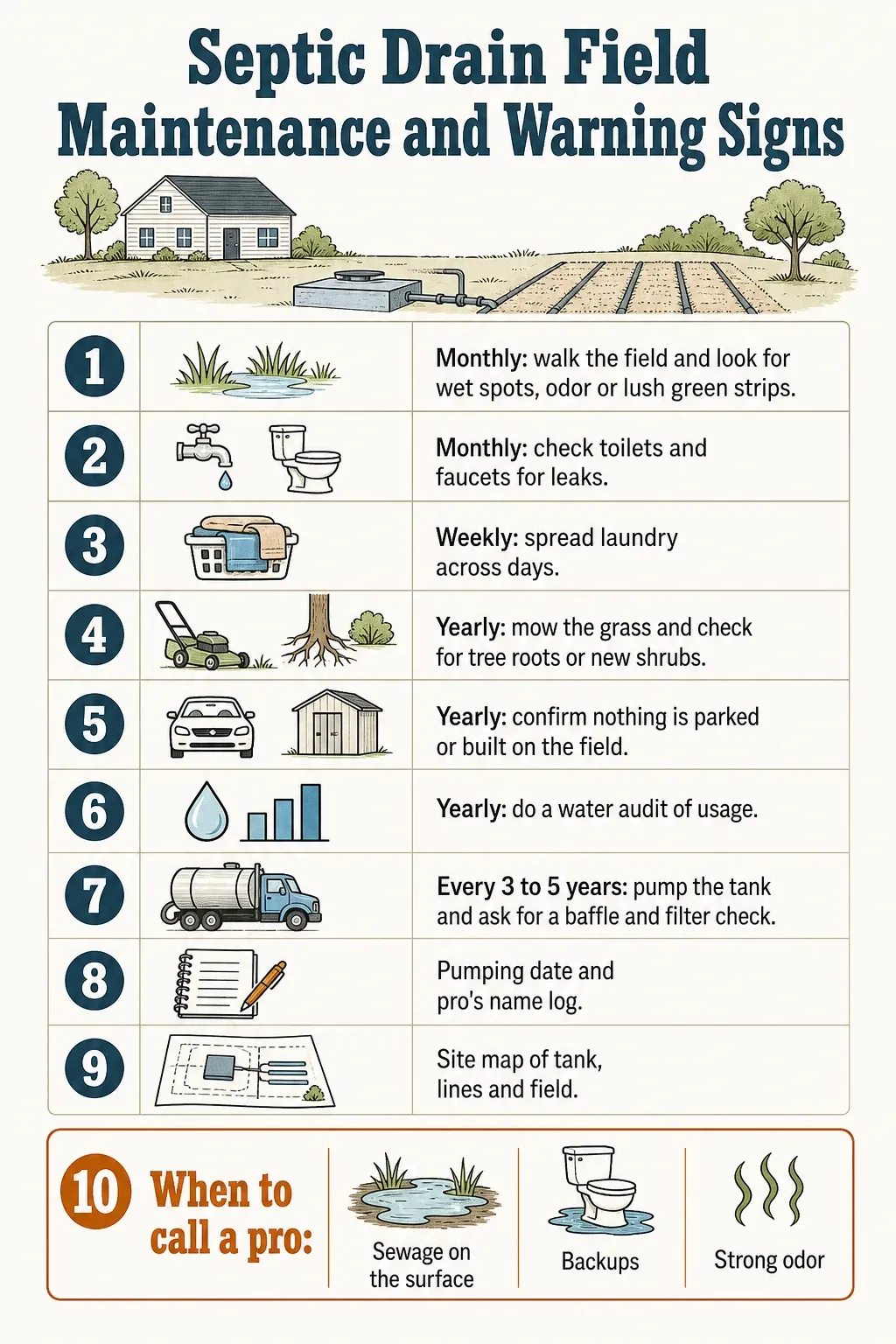
Keep the pumping receipts and a site map with the tank, lines and field marked. A pro or future buyer will thank you.
Check Septifix on the official site60-day money-back guarantee
Where this fits in your septic care
Drain field care is one part of a bigger picture. For the full overview of care, smells and treatments, see septic system basics. To learn how the tank, distribution box and field connect, read septic system components explained. Together they show where a problem starts.
Common questions
Can a saturated drain field recover on its own?
Sometimes a field dries out if you cut water use and the cause was temporary, like heavy rain. If the ground stays soggy or sewage surfaces, the soil may be clogged. Have a licensed septic pro diagnose it before assuming it will recover.
Can I plant a garden over my septic drain field?
It’s best not to. Grass is the safest cover. Deep roots can damage lines, digging disturbs the trenches, and edible plants over a field are a poor idea. Put gardens and trees well away from the field.
Is a drain field the same as a leach field?
Yes. Drain field and leach field are two names for the same part of a septic system: the trenches of gravel and perforated pipes where tank liquid soaks into the soil. You may also hear it called an absorption field.