What Is an Aerobic Septic System and How Does It Work?
An aerobic septic system uses an electric aerator to pump air into the treatment tank, so oxygen-loving bacteria break down waste. Conventional tanks rely on bacteria that work without oxygen. Aerobic systems give cleaner effluent and suit tough sites, but cost more and need power and regular servicing.
Some links on this page are affiliate links: if you buy through them, we may earn a commission at no extra cost to you. Details
Alongside regular pumping and inspections, many septic owners add a monthly treatment to their routine.
Check Septifix on the official site60-day money-back guarantee
In this guide
- What is an aerobic septic system, in plain words?
- How does an aerobic septic system work, step by step?
- Aerobic vs anaerobic septic systems: what is the difference?
- How do I know if my septic tank is aerobic or anaerobic?
- How much does an aerobic septic system cost?
- Pumping, maintenance and warning signs of a failing system
- Who should and should not choose an aerobic system?
- Where does this fit in the bigger septic picture?
What is an aerobic septic system, in plain words?
An aerobic septic system is a home wastewater system that adds air to the tank so bacteria that need oxygen (aerobic bacteria) do most of the cleanup. It’s still a septic system, just with extra parts.
People also call it an aerobic septic tank, an aerobic system, or “aero septic.” Same idea, different names.
Think of a compost pile versus a sealed jar
A stirred compost pile breaks down faster than scraps sealed in a jar because air feeds the right microbes. An aerobic system is the pile. A conventional tank is closer to the jar.
The jar still works. It’s just slower and leaves more behind. The air-fed version trades extra equipment for a cleaner result.
How does an aerobic septic system work, step by step?
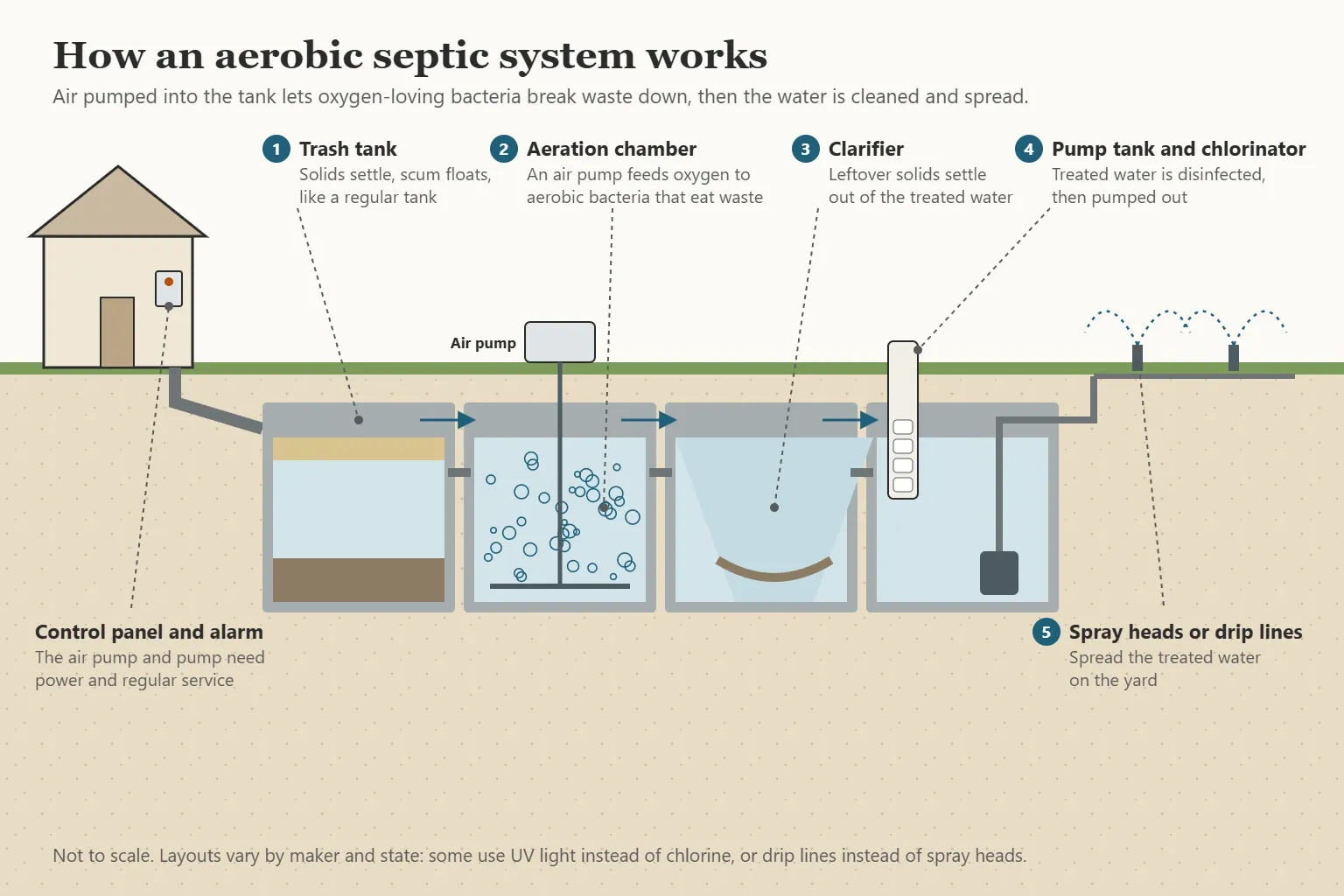
An aerobic system moves wastewater through several chambers, adds air in the middle, and then cleans and spreads the liquid (effluent) on your land. Layouts vary by maker and by state, so your system may combine some of these steps.
Trash tank
The trash tank is the first stop, where solids settle and scum floats. It works much like the front half of a regular septic tank.
Aeration chamber
The aeration chamber is where the aerator (an electric air pump or mixer) feeds oxygen to aerobic bacteria. They consume the waste, which cuts solids and, generally, odor.
Clarification chamber
The clarification chamber is a calm zone where leftover particles settle out before the liquid moves on. Settled material usually returns to the earlier chambers.
Pump tank and disinfection
The pump tank holds treated effluent until a pump sends it onward. Many systems disinfect it first, often with chlorine tablets or ultraviolet light in a disinfection chamber. Your local rules decide what’s required.
Spray or drip irrigation
Treated effluent is usually spread by spray heads, drip irrigation or surface irrigation. Some sites send it to a smaller drainfield (the buried area where liquid soaks into soil) instead.
Electricity powers both the aerator and the pump.
How often should it run? Many aerators run around the clock, while some run on timers. Your manual or service provider gives the right schedule for your model. Don’t change timer settings yourself.
Aerobic vs anaerobic septic systems: what is the difference?
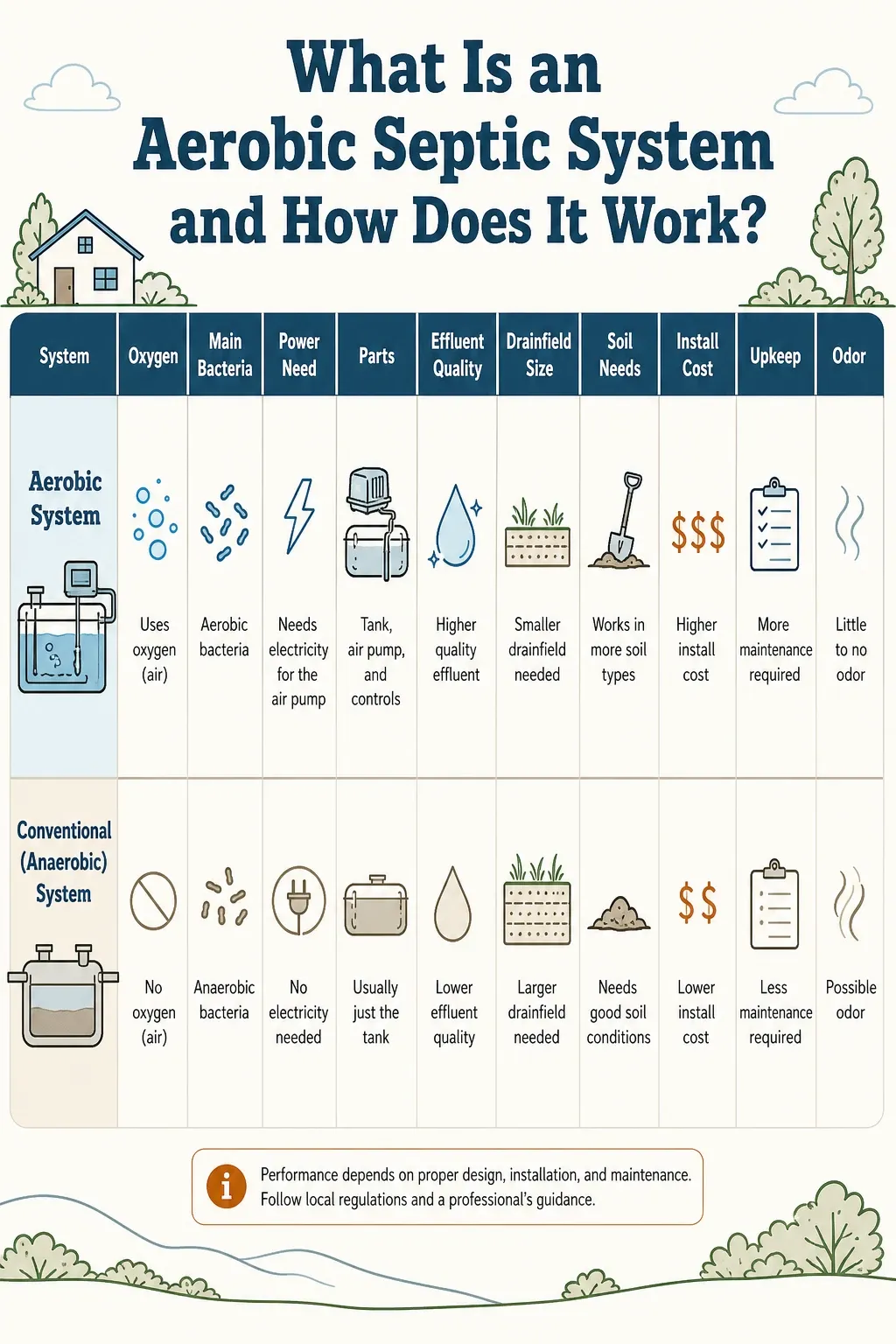
Aerobic systems use air and oxygen-loving bacteria, while conventional systems use bacteria that work without oxygen (anaerobic bacteria). The table shows the main differences, including treatment efficiency, soil conditions, install cost and odor. Figures are general and vary by region and site.
Side-by-side comparison table
| Feature | Aerobic system | Conventional (anaerobic) system |
|---|---|---|
| Oxygen | Added by an aerator | None added |
| Main bacteria | Aerobic bacteria | Anaerobic bacteria |
| Power needed | Yes, for aerator and pump | Often none |
| Parts | Several chambers, aerator, pump, controls | Tank and drainfield |
| Effluent quality | Generally cleaner | Less treated in the tank |
| Drainfield | Smaller, or spray or drip area | Full-size drainfield |
| Soil needs | Works on poorer soil | Needs suitable soil |
| Install cost | Higher | Lower |
| Upkeep | Service contract, parts | Pumping and inspection |
| Odor | Usually low when running well | Can smell if neglected |
Which is better, conventional or aerobic?
Neither wins everywhere. Conventional is simpler and cheaper, so it’s the usual pick when your soil and lot allow it. Aerobic is for sites where a conventional system isn’t approved.
Use this decision rule:
- Soil conditions: poor drainage or a high water table points to aerobic.
- Lot size: a small lot points to aerobic.
- Local rules: your county decides what’s allowed.
- Budget: conventional costs less up front and over time.
- Household size: larger households need a properly sized system of either type.
The three common types of septic tanks are usually listed as conventional, aerobic treatment units and other advanced designs such as mound or sand filter systems. Names vary by state.
How do I know if my septic tank is aerobic or anaerobic?
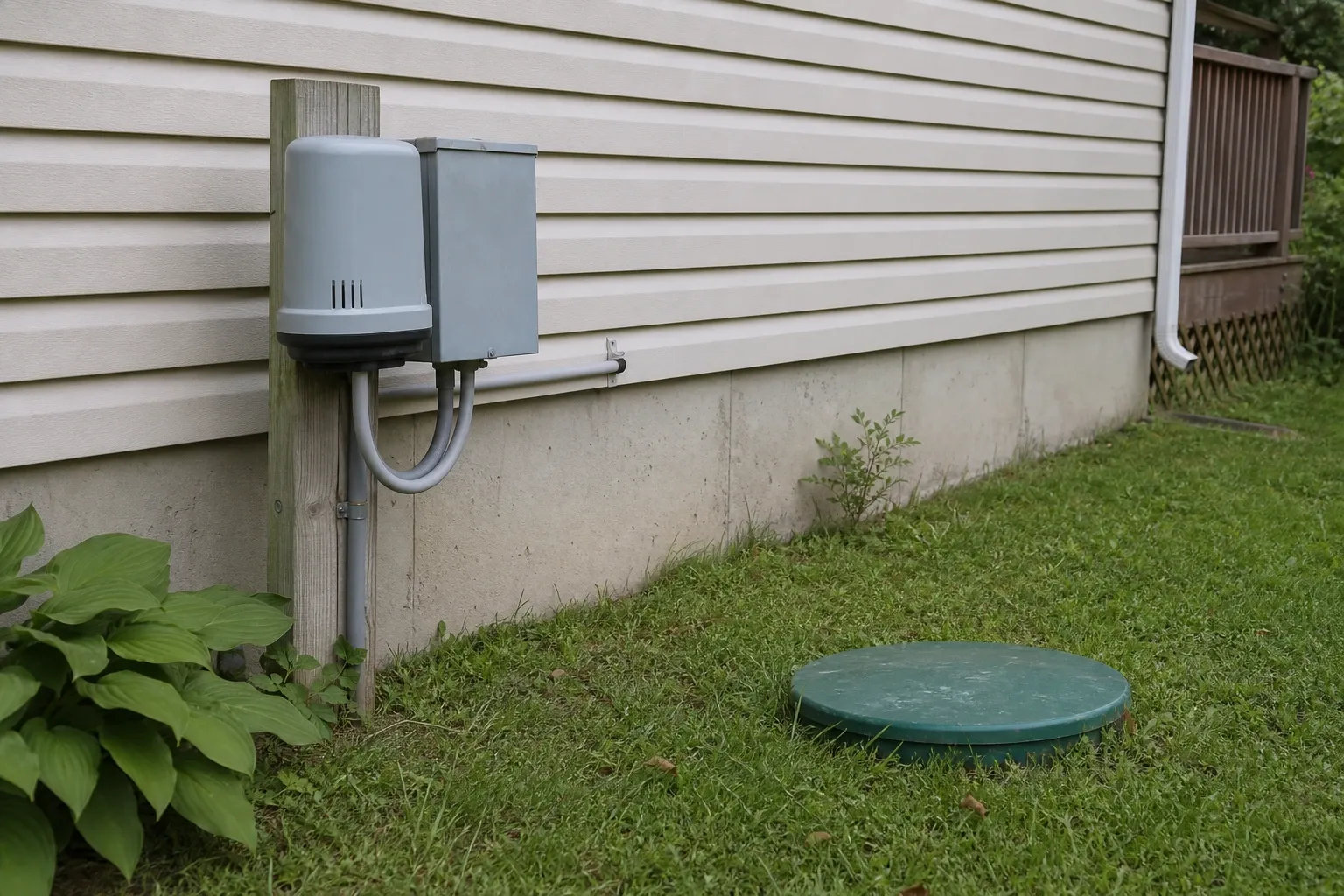
You likely have an aerobic system if you see power equipment at the tank or sprinkler-type heads in the yard. A plain buried tank with no power is usually conventional.
Quick checks at the tank
- An electrical control panel or alarm box nearby
- A green or black lid with a motor, hum or air line
- Spray heads or irrigation lines in the yard
- A dedicated power line running to the tank area
Don’t open lids yourself. Gases in tanks are dangerous, and heavy lids are a safety risk.
Paperwork and local records
Your permit, as-built drawing (the installer’s map of what’s buried) and any service contract will name the system type. Home sale paperwork often has it too.
Still unsure? Ask your county health department or a licensed septic pro.
How much does an aerobic septic system cost?
Aerobic systems are commonly cited at roughly $10,000 to $20,000 installed, though prices swing with region and site. Get local quotes before budgeting.
Installation cost
The price covers extra tanks, the aerator, controls, pump and the spray or drip field. Permits and site work change the total a lot.
Maintenance cost and yearly running costs
Expect a service contract, electricity and occasional parts. Ranges vary widely, so ask installers for local figures and what the contract covers.
Lifespan and replacing an aerator
Aerator replacement costs vary by model and region, and I can’t point to a reliable published range. Ask a licensed service provider for a written quote. The tank itself can last for decades, while mechanical parts like the aerator and pump wear out sooner.
Pumping, maintenance and warning signs of a failing system
Aerobic systems need regular professional service. EPA says systems with pumps, float switches or other mechanical parts should be inspected more often than conventional ones, generally once a year, and many service contracts and local permits call for visits several times a year. Pumping happens when the tank calls for it: a septic professional measures the sludge and scum layers and decides when to pump.
Service and pumping schedule
Follow your manual, permit and service contract, whichever asks for the most frequent visits, and keep records. For everyday homeowner habits, EPA SepticSmart has simple tips.
Harsh chemicals, heavy grease and wipes can upset the bacteria. Some owners of conventional tanks add bacterial or oxygen-releasing tablets between pumpings. Septifix is one example. The maker says it releases oxygen and carries live aerobic bacteria. It isn’t a substitute for an aerobic system or for service, and the maker hasn’t published independent test results. Check your manual and local rules first, since some aerobic systems restrict additives. Our Septifix review covers its terms.
Signs something is wrong
- An alarm sounding or a warning light
- A silent aerator
- Odors near the tank or yard
- Slow drains or back-ups
- Pooling water or dead patches at the spray area
Call a licensed septic pro for any of these. Back-ups and drain field problems need professional help.
Who should and should not choose an aerobic system?
Aerobic systems suit sites where a conventional system won’t work, and they ask more of the owner. Local permits and rules vary by state and county, so check with your health department.
Good fit
- Poor soil or a high water table
- A small lot
- A site near water
- Stricter effluent rules
Poor fit
- A site where a conventional system is approved
- Off-grid homes with unreliable power
- Owners who don’t want a service contract
Quick check: if your soil passes and your lot is roomy, ask about conventional first. If not, ask which advanced systems your county approves.
Where does this fit in the bigger septic picture?
Aerobic systems are one branch of how home septic works. Our guide to septic system basics covers care, smells and treatments across all types.
For how oxygen-free and oxygen-using microbes differ in practice, read bacteria for septic systems. To see how tanks, pumps and fields connect, see septic system components.
Common questions
Can an aerobic septic system work during a power outage?
Not fully. The aerator and pump need electricity, so treatment slows or stops during an outage. Short outages are usually manageable if you cut water use. For long ones, call your service provider and ask what to do for your model.
Do aerobic septic systems smell?
A well-running one usually has little odor, because oxygen-loving bacteria don’t produce the rotten-egg smell. A smell often points to a failed aerator, an alarm condition or a neglected system. Call a licensed septic professional to check it.
Can aerobic systems be added to an existing septic tank?
Sometimes. Some installers can retrofit or replace a failing conventional setup with an aerobic unit, but it depends on your site and local rules. Permits are usually required, so start with your county health department and a licensed installer.