Why Your House Smells Like a Septic Tank
A septic smell indoors usually means sewer gas is slipping past a dry drain trap, a blocked vent or a worn toilet seal. A full tank or damaged line is less common. Run water in unused drains, find the strongest room, check the vent and lid, and call a septic pro if it lingers.
Some links on this page are affiliate links: if you buy through them, we may earn a commission at no extra cost to you. Details
Septifix: Monthly flush-in septic tank tablets that the maker says release oxygen and add live aerobic bacteria.
Check Septifix on the official site60-day money-back guarantee
In this guide
- Why does my house smell like a septic tank?
- Is the smell coming from inside or outside, and is it septic or city sewer?
- Step 1: Could a dry drain trap or floor drain be the cause?
- Step 2: Is a plumbing vent blocked or a toilet seal leaking?
- Step 3: Is the septic tank full or the lid and riser leaking?
- Step 4: Could the sewer line, drain field or tree roots be to blame?
- Is septic smell in the house dangerous, and when should you leave?
- What if the smell stays after the trap is refilled and the vents are clear?
- Where to go next
Why does my house smell like a septic tank?
Your house smells like a septic tank because sewer gas is getting past the water seals and vents meant to keep it in the pipes. Picture this: you walk into the guest bathroom after a week away, and it smells like rotten eggs. Nothing is broken. Something simple is often the cause.
What sewer gas smells like
Sewer gas is a mix of gases, and the one your nose catches first is hydrogen sulfide, which smells like rotten eggs. Here’s a rough guide to what you might notice:
- Rotten egg: hydrogen sulfide gas. Often a dry trap, a damaged plumbing vent or a tank issue.
- Raw sewage: a stronger leak, such as a bad toilet seal or a cracked pipe.
- Musty or earthy: often damp spots, a slow leak or mildew near a drain.
These are hints, not a diagnosis. The room and the timing tell you more than the smell itself.
Why the smell can come and go
The smell comes and goes because it escapes only when conditions let it: a dry trap, a draft, wind over the roof vent, or a burst of water after a shower. Noses also differ. You may notice it while others don’t, and you can get used to a smell after a few minutes.
The key idea is the P-trap, the curved pipe under every sink. It holds a small plug of water, like a cork made of water, that blocks gas from climbing back up. This drain trap water seal is the first line of defense. When the water is gone or pulled out, the cork is gone too.
Is the smell coming from inside or outside, and is it septic or city sewer?
To tell inside from outside, walk the house and then the yard, and note where the smell is strongest. Is it at one drain, at the tank lid, or over the drain field (the buried pipes that spread tank water into the soil)?
Indoor versus outdoor clues
A smell strongest at one drain points to that drain’s trap or pipe. A smell strongest outside points to the tank lid, a riser cover or the drain field. A smell that’s everywhere may mean a vent problem or a bigger issue.
Septic smell versus municipal sewer smell
If you’re on a septic system, the source is on your property. If neighbors on city sewer smell it too, call the utility and ask whether there’s a known problem in the area. A septic smell is usually local to your own home.
Timing matters as well. Heat, heavy rain and falling air pressure can all change how strongly a smell travels. And if only the hot water smells like rotten eggs, the cause may be sulfur bacteria in the water heater, not your septic system. A plumber or water pro can check that.
To narrow it down, take the short quiz here.
Where is the septic smell coming from? 6 quick questions
Answer six quick questions to narrow down the most likely source, and who to call if you need help.
Get everyone outside, then call for help
Sewer gas can make people ill in a closed space, and a rotten-egg smell can also be a gas leak. Leave the house, and call your local emergency number or your gas company from outside. Don’t go back in until the smell has cleared and a professional has checked it.
Call a licensed septic professional
Water backing up, slow drains all over the house, or a smell or wet ground over the drain field point to a full tank, a blocked line or a struggling drain field. Use as little water as you can until a licensed septic pro has checked it. Our drain field guide explains the warning signs.
Most likely a dry drain trap
Drains that aren’t used often lose the water in their trap, and that water is what keeps sewer gas out. Run water for a minute in every sink, shower, tub and floor drain, then check again in a few hours. Our step-by-step guide to getting rid of septic smell covers the next checks.
Check the toilet's seal
A smell around one toilet often means a worn wax ring or loose bolts at the base. If the toilet rocks or the floor around it is damp, a plumber can replace the seal.
Check the roof vent
A whole-house smell often comes from a plumbing vent blocked by leaves, a nest or ice, which lets gas back in through the drains. Look at it from the ground, or have a plumber or roofer check it. Don’t climb onto the roof yourself.
Book a septic inspection
If it’s been more than 5 years, or you don’t know, start with an inspection. A septic pro measures the sludge and scum layers and pumps the tank if it needs it. An overdue tank is a common source of septic odors. Our septic tank maintenance schedule shows how often to pump.
Check the tank lid, then keep up regular care
A smell near the tank with no other warning signs often comes from a lid or riser that doesn’t seal, so check it for cracks or gaps and keep it closed tight. After that, pumping on schedule and a steady routine help keep odors down. Some owners add a monthly maintenance treatment to that routine: see our Septifix review or our guide to septic smell removers.
If you'd like a monthly maintenance tablet, Septifix is sold with a 60-day money-back guarantee; read the refund terms before you order.
Check Septifix on the official site60-day money-back guarantee
Start with the simple checks
Run water in every drain, check each toilet for rocking or a damp floor, and look at the roof vent and the tank lid. If the smell lingers after that, call a licensed septic professional. Our guide to getting rid of septic smell walks through each check.
Step 1: Could a dry drain trap or floor drain be the cause?
A dry P-trap is the most common and cheapest cause of a septic smell indoors. The water seal in the trap evaporates in drains nobody uses, and gas walks right in.
DIY test for a dry trap
- Run water for about a minute in every unused sink, tub and shower.
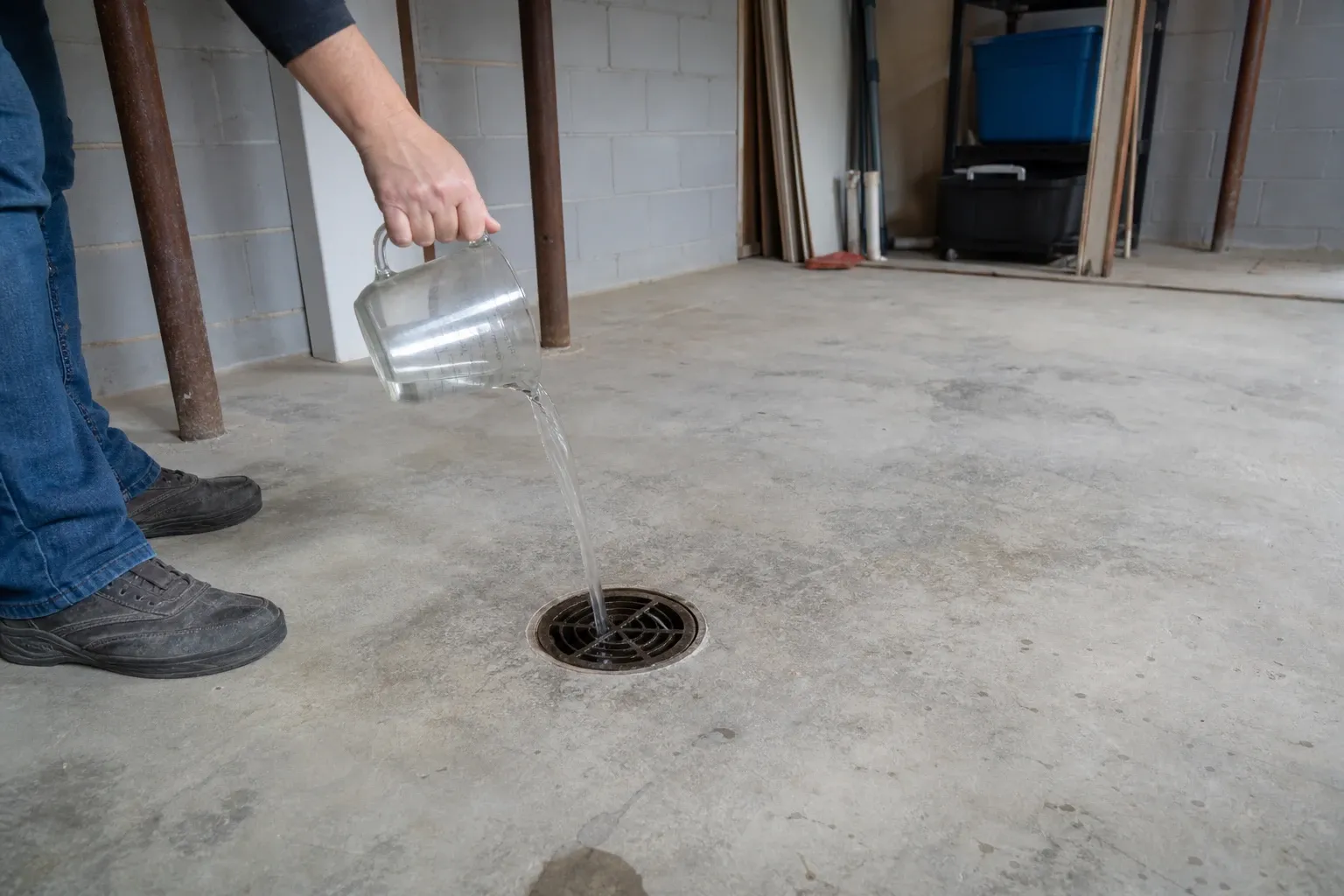
- Pour water into each floor drain.
- Sniff near each drain. If the smell fades, you found it.
If one drain smells strongest, start there. Air fresheners only mask the odor, so find the source first.
Floor drains and rarely used bathrooms
A floor drain dries out faster than a sink trap, often in a basement or laundry room. Refill it with water, then add a spoonful of cooking oil on top to slow evaporation. Repeat every month or so for rooms you rarely use.
Here’s how all the causes line up, simplest first. Costs are typical ranges and vary by area, so get local quotes.
| Order | Cause | Quick DIY test | Typical cost | Who to call |
|---|---|---|---|---|
| 1 | Dry trap or floor drain | Run water in unused drains | Free | You |
| 2 | Blocked or damaged vent | Look for gurgling, check the roof vent from the ground | About $100 to $400 to clear | Plumber |
| 3 | Loose toilet or worn wax ring | Rock the toilet, look for damp floor | About $100 to $300 | Plumber |
| 4 | Full tank or loose lid | Check lid, drain speed, damp yard | About $300 to $600 to pump | Septic pro |
| 5 | Cracked pipe or tree roots | Repeated clogs, wet spots | Camera check about $100 to $500; repairs vary widely | Septic pro or plumber |
| 6 | Failing drain field | Soggy ground, lush grass, odor outdoors | Often the costliest; get a pro’s quote | Septic pro |
Quick tip: For sewer gas smell you can’t place, refill every trap before you spend a dollar.
Step 2: Is a plumbing vent blocked or a toilet seal leaking?
A blocked plumbing vent or a failing toilet seal is the next most likely cause once the traps are full. The vent is the pipe through your roof that lets air in so water drains smoothly and gas goes up and out.
Blocked or damaged vents
Gurgling drains, slow drains and a smell near the roofline suggest a damaged plumbing vent or a blocked one. Leaves, nests, snow or ice can block it. Roof work is risky, so hand it to a plumber unless you’re very comfortable up there. Clearing a vent often runs roughly $100 to $400.
Toilet wax ring and loose toilets
The wax ring is a ring of wax under the toilet that seals it to the drain. An improperly installed toilet or an old ring can leak gas.
Signs include a rocking toilet, a smell only near the base and a damp floor. Check the bolts and look for moisture around the base. Replacing a wax ring often costs about $100 to $300 with a plumber.
Step 3: Is the septic tank full or the lid and riser leaking?
A full septic tank can cause a smell in the house, usually along with other signs. A tank that’s overdue for septic tank pumping holds more sludge, and drains slow down.
Signs your septic tank is full
- Slow drains throughout the house
- Gurgling drains
- A wet or smelly patch in the yard
- Sewage backup in a tub or floor drain
A sewage backup is a reason to call a septic pro right away. A damaged lid, a cracked baffle or a missing riser cover (the cover over the tank access) can also let gas out near the house, even after pumping.
Pumping frequency by household size and tank size
The EPA says most tanks need pumping typically every 3 to 5 years, and that is the common guide. Bigger households and smaller tanks need it sooner. The table below is a rough planning guide, so ask your pro for your own schedule.
| Tank size | 1-2 people | 3-4 people | 5-6 people |
|---|---|---|---|
| 1,000 gallons | Every 3 to 5 years | Every 2 to 3 years | Every 1 to 2 years |
| 1,500 gallons | Every 4 to 5 years | Every 3 to 4 years | Every 2 to 3 years |
These ranges are a rule of thumb, not an official schedule. A septic professional measures the sludge and scum layers and decides when to pump.
Insoluble solids and what shouldn’t be flushed
Insoluble solids are things that don’t break down, like wipes, floss and grease. Keep them out of drains. They build up and speed the day you need pumping. For everyday homeowner habits, see EPA SepticSmart.
Step 4: Could the sewer line, drain field or tree roots be to blame?
A cracked drainpipe, tree root invasion or a failing drain field are the most serious causes, and they need a pro. They’re less common, but they matter most.
Cracked pipes and tree roots
Repeated clogs, wet spots, a smell in the yard and sewage backup can point to a blocked sewer line or a cracked drainpipe. A sewer camera inspection sends a small camera through the pipe to find the break without digging. Expect roughly $100 to $500 for the camera work. Repair costs vary a lot with depth and length.
Failing drain field
Soggy ground, unusually lush grass and a sewage odor outdoors can signal a failing drain field. Don’t drive or build over it. A septic pro should diagnose it, and repairs can be the biggest expense on this list. For upkeep, see our drain field guide.
Is septic smell in the house dangerous, and when should you leave?
A light septic smell is mostly a nuisance, but strong sewer gas is not something to sit in. Hydrogen sulfide at higher levels can cause headaches, nausea and eye or throat irritation.
- Leave and open doors and windows if the smell is strong or you feel dizzy or ill.
- Call emergency services if you suspect a major leak, then a septic pro.
- Sewer gas can also collect in enclosed spaces, and methane is flammable, so avoid flames and sparks.
- Never go into the tank. Tank gases can be deadly.
If the smell is faint and you feel fine, work through the steps above and book a pro if it stays.
What if the smell stays after the trap is refilled and the vents are clear?
If the smell stays, retrace your steps one room at a time, check the tank lid, then book a septic inspection. Lingering smell with gurgling or slow drains is the point to call a pro.
Tell the pro:
- When it smells (time of day, after showers, after rain)
- Which drains or rooms are worst
- When the tank was last pumped
- Recent weather
Between pumpings, spread out laundry loads, skip grease and wipes, and keep vehicles off the drain field. Some owners also add monthly bacteria tablets. Septifix is one example. The maker says its oxygen-releasing tablets with live bacteria support the tank, and that the oxygen reacts with hydrogen sulfide. The maker hasn’t published independent test results for Septifix. It’s an optional upkeep step, not a repair for a dry trap, a bad seal or a full tank. Our Septifix review lists the price tiers and the 60-day money-back guarantee the maker states. We may earn a commission if you buy through our links, at no cost to you.
Check the current Septifix offer and refund terms on the official site.
Check Septifix on the official site60-day money-back guarantee
Where to go next
Our septic system basics page explains how the tank, pipes and drain field work together, which makes every smell easier to trace. For more on odors, read how to get rid of septic tank smell. If you want to compare deodorizing products, see our guide to a septic tank smell remover.
More guides in Septic Smells
Common questions
Will baking soda or vinegar get rid of septic smell in the house?
Not reliably. They may freshen a drain briefly, but they don’t fix a dry trap, a bad seal or a full tank. Refill traps with plain water first, find the source, and call a septic pro if the smell keeps coming back.
Why does my bathroom smell like sewage only after a shower?
Running water can push stale air out of a drain or pull the water seal down, which releases gas. Common causes are a dry or siphoned trap, a partly blocked vent or a loose toilet seal. Refill traps and check the toilet base.
Can I use bleach or drain cleaner on a smelly septic system?
It’s best not to. Strong chemicals can harm the helpful bacteria in your tank and won’t fix a vent, seal or tank problem. Use plain water in dry traps and call a septic pro if the smell stays.