Natural Septic Tank Treatments: What Is Worth Trying
Most natural septic remedies do little good, and a few can do harm. Your tank already holds the bacteria it needs, so the best natural care is pumping every 3 to 5 years, saving water and flushing only toilet paper. Small amounts of baking soda and vinegar are fine. Yeast and sugar have little proof behind them.
Some links on this page are affiliate links: if you buy through them, we may earn a commission at no extra cost to you. Details
Septifix: Monthly flush-in septic tank tablets that the maker says release oxygen and add live aerobic bacteria.
Check Septifix on the official site60-day money-back guarantee
In this guide
- Do natural septic tank treatments actually work?
- Home remedies rated by risk and evidence
- How do you increase bacteria in a septic tank naturally?
- What is the worst thing for a septic tank?
- Which household cleaners are safe for septic systems?
- Natural, DIY or commercial: how do the options compare?
- A simple maintenance schedule between pumpings
- When is it a problem a remedy won’t fix?
- Where should you go next for treatment comparisons?
Picture this. Your septic tank smells a bit off after a wet week, and a neighbor swears by a cup of yeast and brown sugar down the toilet. Before you head to the pantry, here’s what’s worth knowing.
Do natural septic tank treatments actually work?
Most natural septic tank treatments do very little, because your tank already has the bacteria it needs. Some are harmless and a few can hurt. Pumping and a septic professional’s inspections are still what keep your tank working.
What already lives in your tank
Your septic tank is already full of bacteria that don’t need air (anaerobic bacteria). They break down waste, and sewage is their food supply. You don’t have to feed them. These bacteria also form a thin, slimy layer called biofilm on tank surfaces and in the soil of the drain field, and that layer helps break waste down too. Harsh chemicals can damage it.
Solids settle into layers. Heavy material sinks and becomes sludge. Light material like grease floats and forms scum. Water in the middle flows out to the drain field, the buried area where soil finishes cleaning the water.
What a treatment can and cannot do
A treatment can be optional support, but pumping is what removes sludge that has built up. Think of the tank like a compost bin: the microbes do their work, but eventually you still have to empty it. A septic professional measures the sludge and scum layers and decides when to pump.
So, do you need to put chemicals in your tank? No. And what dissolves sludge? Nothing you pour in at home. For more on the basics, see our septic system basics guide.
Home remedies rated by risk and evidence
Home remedies range from harmless to risky, and none has strong independent research behind it. Costs below are rough, everyday pantry prices.
Baking soda
Baking soda is mostly harmless in laundry-sized amounts. It raises pH slightly (pH balance is how acidic or basic water is). A cup or so now and then won’t hurt, but it won’t clear sludge or fix a smell. More detail is in our guide on whether baking soda is safe for septic systems.
Vinegar and lemon
Vinegar is fine in small, diluted amounts for a slow drain. Large pours can upset the bacteria, so skip the gallon jug. Lemon juice is the same story: a little for freshness is okay, and neither treats the tank.
Yeast and brown sugar
Yeast is sold as a bacteria booster, but yeast is a fungus, not a bacterium. Brown sugar is just food. Proof that this mix helps a tank is thin, so it’s an optional experiment at best, not a maintenance plan.
Hydrogen peroxide
Hydrogen peroxide in strong doses can kill the helpful bacteria. Skip it as a tank treatment. A splash on a stained sink is a different matter.
Epsom salt and other kitchen tricks
Epsom salt and other kitchen tricks have no solid support as septic care. Salt can add to the load on the system, and there’s no reason to pay for the risk.
How do you increase bacteria in a septic tank naturally?
The most reliable way to keep tank bacteria healthy is to stop harming them. Adding more rarely fixes anything.
Habits that protect the bacteria you have
Protecting your tank’s bacteria starts with everyday habits, many of them covered in the EPA’s guidance on how to care for your septic system:
- Spread laundry across the week instead of doing five loads on Saturday.
- Fix running toilets and dripping faucets.
- Skip antibacterial soaps and heavy bleach use.
- Flush only toilet paper and human waste.
What kills bacteria in a septic system? Big doses of bleach, caustic drain cleaners, strong disinfectants and some medications.
Why adding more rarely fixes a problem
If bacteria seem dead or overworked, there’s usually a cause to find, like too much water, grease or a full tank. Topping up doesn’t solve that. Tanks also differ from cesspools (a pit with no separate drain field) and RV tanks, so advice for one doesn’t carry over. Our bacteria for septic systems page goes deeper.
Quick tip: Run the dishwasher and washer at different times so the tank gets a chance to settle.
What is the worst thing for a septic tank?
The worst things for a septic tank are grease, wipes and harsh chemicals, because they clog or harm the system. Repairing a drain field is costly.
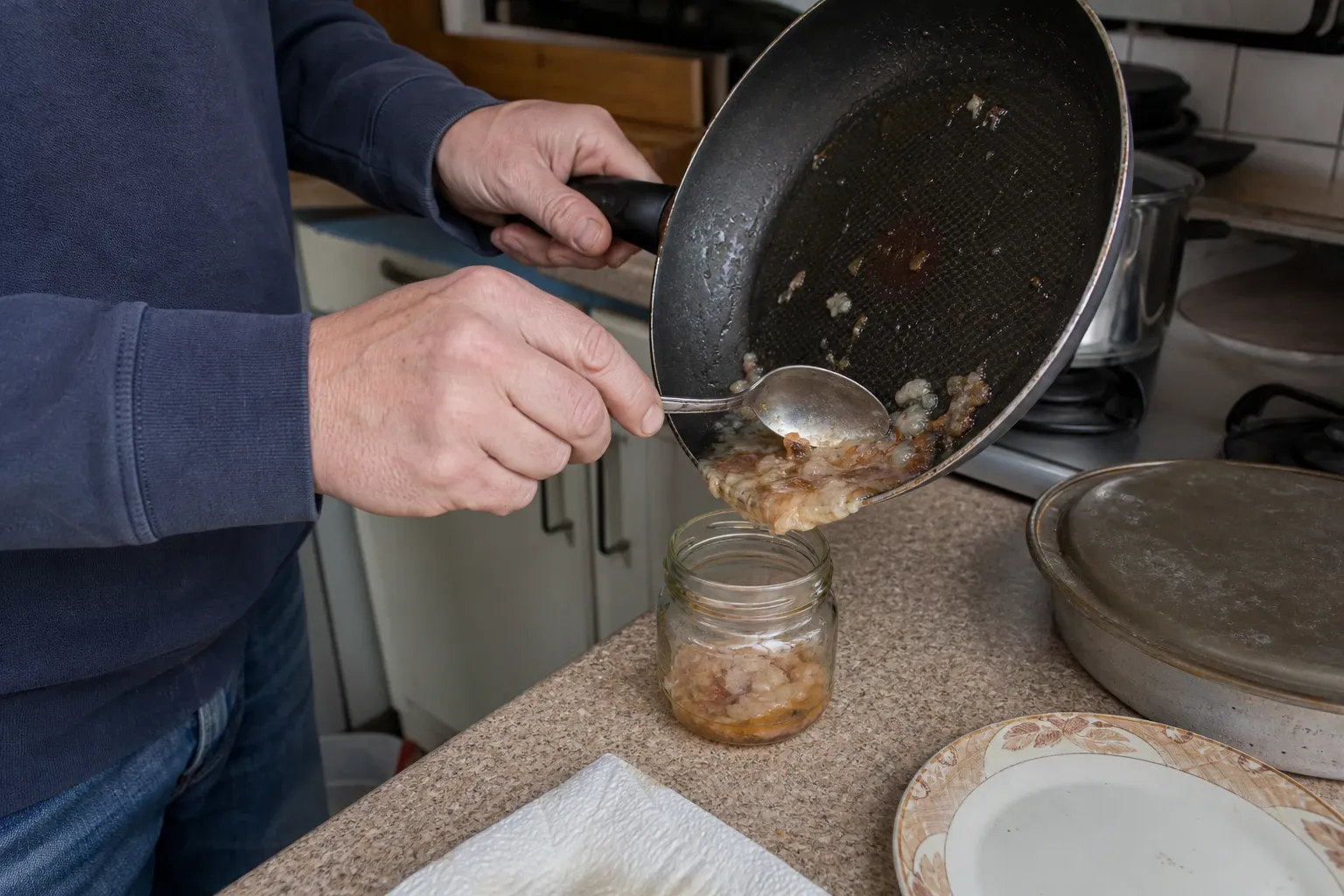
Grease, oil and wipes
Grease and oil float, harden and clog the tank and field. Wipes, even ones labelled flushable, don’t break down well. Put both in the trash.
Harsh drain cleaners and chemicals
Caustic drain cleaners and large amounts of bleach can harm bacteria. A garbage disposal also adds solids and speeds up sludge build-up.
Tree roots and heavy traffic over the field
Tree roots can crack pipes and invade the field. Cars and heavy equipment can crush pipes and pack the soil. Keep both off the area. See our drain field guide for more.
Which household cleaners are safe for septic systems?
Mild cleaners used in small amounts are generally fine for a septic system. Heavy, constant bleach is the main thing to avoid.
Toilet bowl cleaners and the toilet tank
Choose a mild toilet bowl cleaner and use a modest amount. Avoid tablets that sit in the toilet tank and release bleach with every flush. For a fresh tank, a little vinegar is a gentler habit.
Laundry and dish products
Use regular amounts of liquid or easily dissolving detergent, and skip extra-strength antibacterial products. Septic-safe toilet paper and water-saving fixtures help too. Our page on septic safe cleaners names more.
Natural, DIY or commercial: how do the options compare?
DIY remedies are cheap and low-proof, while commercial products cost more and rest mostly on maker claims. None removes built-up sludge.
Cost and effort side by side
| Option | Typical amount | Cost | Risk to tank and field | Evidence | Cannot fix |
|---|---|---|---|---|---|
| Baking soda | About 1 cup, occasionally | Pennies | Low | Thin | Sludge, smell source |
| Vinegar | Small, diluted | Pennies | Low if small | Thin | Sludge, back-ups |
| Yeast and brown sugar | Pantry amounts | Pennies | Low | Thin | Sludge, failures |
| Hydrogen peroxide | Strong doses | Low | Can harm bacteria | Thin | Sludge |
| Enzyme or bacteria products (such as Rid-X, Green Gobbler, Roebic) | Per label, packets, pods or liquid formula | Varies by brand | Generally low if used as labelled | Mostly maker claims | Sludge, failures |
| Aerobic tablets | Monthly dose | See below | Not stated | Maker claims | Sludge, failures |
| Pumping | Every 3 to 5 years | Varies by area | None | Standard practice | Nothing it can’t |
No one of these replaces pumping.
What sellers claim and what is proven
Enzymes are proteins that speed up breakdown of waste. Sellers say they cut odors or help with clogs, but those are maker claims. Independent proof is limited, and extension services stay cautious. Our septic tank treatment comparison covers types in detail.
Where an oxygen-releasing aerobic bacteria tablet fits
Septifix is one optional commercial choice: tablets flushed monthly, said by the maker to contain live aerobic bacteria (bacteria that use oxygen) and an oxygen-releasing compound. The maker says it helps with odors. The maker hasn’t published independent test results for Septifix. It’s priced at $69 for a 6 month supply plus shipping, $118 for 12 months and $147 for 18 months, with a 60-day money-back guarantee. It’s not a substitute for pumping or a fix for a problem. Our Septifix review has the details.
Check the current Septifix offer and the 60-day refund terms on the official site. We may earn a commission if you buy through our link.
Check Septifix on the official site60-day money-back guarantee
A simple maintenance schedule between pumpings
A steady routine of monthly checks, yearly inspections and pumping every 3 to 5 years does more than any remedy.
Monthly
- Check drains and toilets for slow flushing.
- Spread out laundry.
- Fix leaks.
- Add a dose only if you choose a product and follow its label.
Every year
- Ask a pro to check baffles (the parts that keep solids in), scum and sludge levels.
- Keep cars and roots off the drain field.
For more everyday homeowner tips, see EPA SepticSmart.
Every 3 to 5 years
Have the tank pumped by a licensed pro. Big households may need it sooner. Soil type, a high water table or cold climate can change the timing, so ask your pro what suits your lot. See our maintenance schedule for a checklist.
When is it a problem a remedy won’t fix?
Sewage odor, gurgling drains, soggy ground or a sewage backup mean you should call a licensed septic professional, not reach for a remedy.
Pouring things into a failing system won’t fix it and may waste time. Pumping and inspection come first. A pro can find whether the cause is a full tank, a blocked pipe or a drain field problem.
If the smell is indoors, see septic smell in the house.
Where should you go next for treatment comparisons?
For a broader look, our septic tank treatment page compares treatments by type. If you’re weighing a specific tablet, the Septifix review lays out its cost, ingredients and who it suits.
Common questions
Can I use yeast in my septic tank every month?
You can, but there’s little proof it helps. Yeast is a fungus, not the bacteria your tank relies on. Monthly doses add cost without a clear benefit. Pumping every 3 to 5 years and saving water do far more.
Are natural septic treatments safe for the drain field?
Small amounts of baking soda or diluted vinegar are usually fine. Large pours of vinegar or strong hydrogen peroxide can upset helpful bacteria. If you’re unsure, ask a licensed septic pro before adding anything.
Do septic treatments work in a cesspool?
Cesspools work differently from septic tanks because they’re a pit without a separate drain field. Advice for tanks may not apply. Ask a licensed septic pro what suits your system before adding anything.