How to Add Bacteria to a Septic Tank, Step by Step
Most healthy tanks grow their own bacteria. If you still want to add some, flush or pour a septic-safe bacterial product at the label dose, usually monthly, and keep bleach, drain cleaners and antibacterial cleaners out. No additive replaces pumping every 3 to 5 years.
Some links on this page are affiliate links: if you buy through them, we may earn a commission at no extra cost to you. Details
Septifix: Monthly flush-in septic tank tablets that the maker says release oxygen and add live aerobic bacteria.
Check Septifix on the official site60-day money-back guarantee
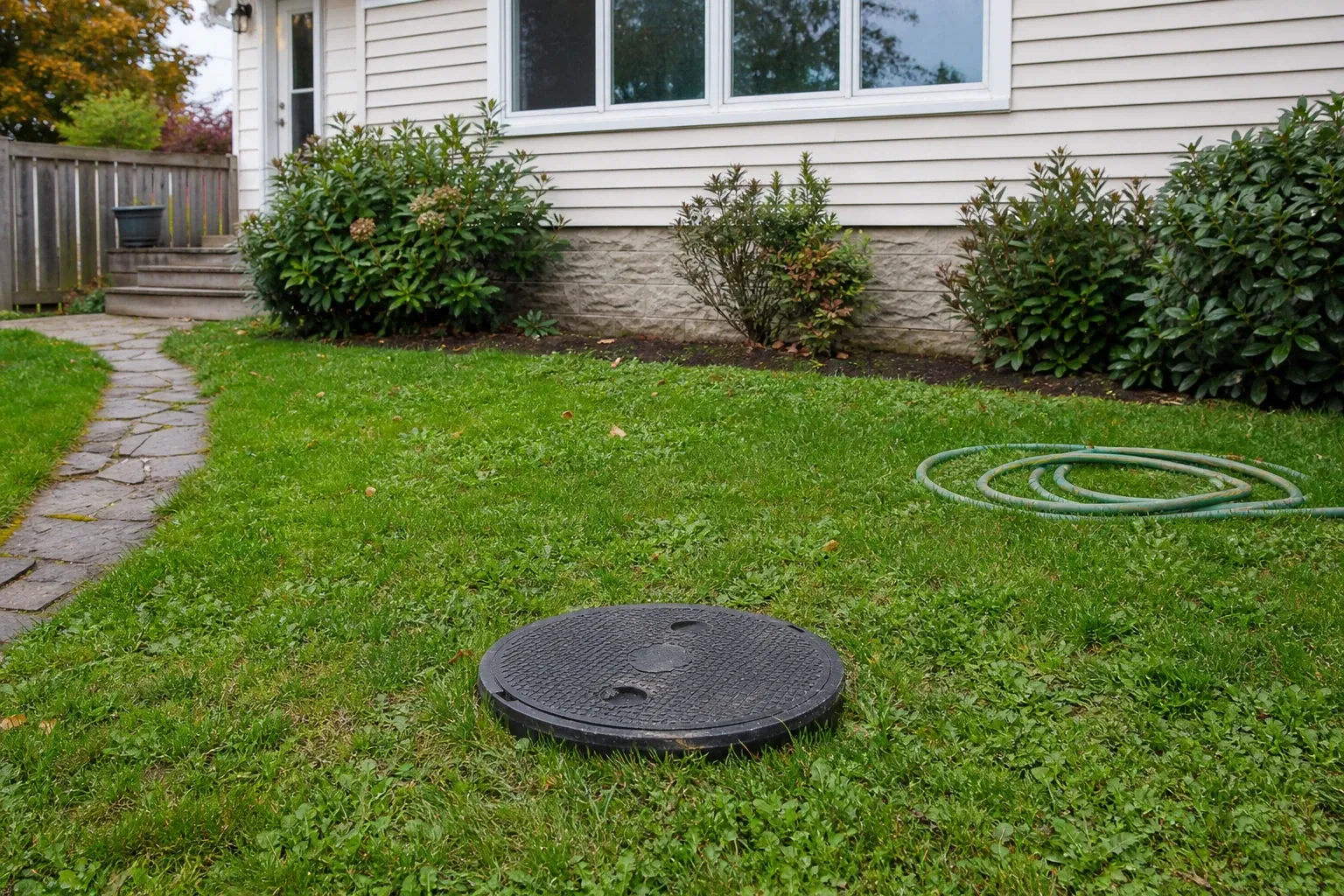
In this guide
- Do you actually need to add bacteria to a septic tank?
- Is your system aerobic or anaerobic, and which bacteria fit it?
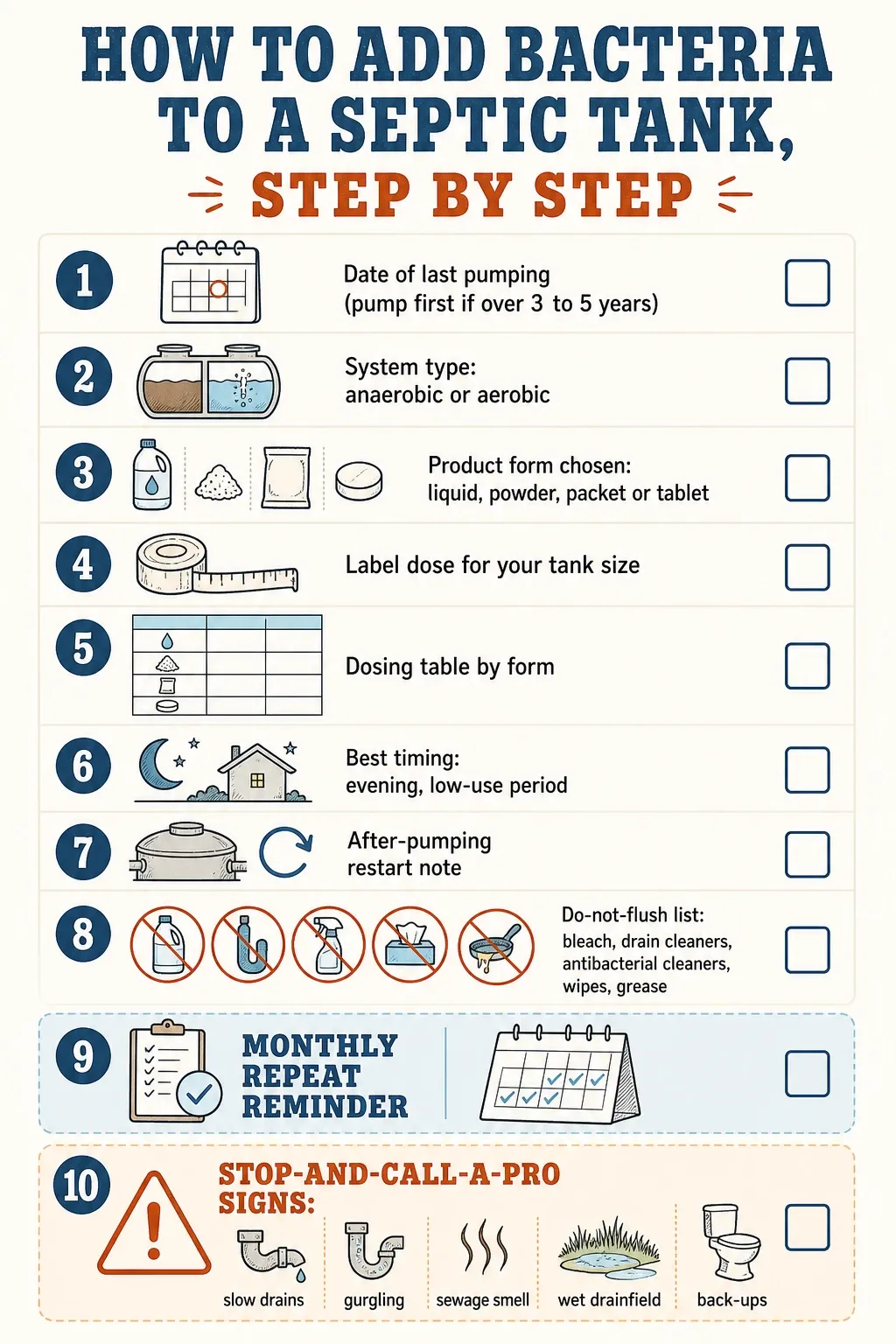
- How to add bacteria to your septic tank, step by step
- What to avoid flushing so the bacteria survive
- Can you make homemade septic tank bacteria, and what about yeast?
- Will bacteria reduce sludge, and can a tank skip pumping?
- What are the signs your septic tank is full?
- Where does this fit with the bigger bacteria question?
Do you actually need to add bacteria to a septic tank?
Most healthy septic tanks don’t need added bacteria, because everyday household waste already brings them in. Think of a sourdough starter: once it’s going, it keeps itself going.
Imagine you’ve just had the tank pumped and the drains feel fine, but a neighbor says you should “restart” it. That’s a fair question, and the answer depends on your situation. A product like this is called a biological additive: a store-bought dose of live bacteria or enzymes meant to boost what the tank already does.
When adding bacteria can make sense
Adding bacteria is reasonable after a few specific events. These include:
- A new tank or one that was just pumped.
- Heavy bleach use or a long course of antibiotics in the house.
- An aerobic treatment unit (a system with an air pump) where the maker of the unit allows it.
Even then, it’s an optional extra, not a repair.
When it will not help
Bacteria can’t fix a tank that is full of sludge or a drainfield that is failing. The drainfield is the buried area where treated water soaks into the soil. If you have back-ups or soggy ground, call a licensed septic pro first.
Is your system aerobic or anaerobic, and which bacteria fit it?
Most home tanks are anaerobic, meaning the bacteria work without air. Aerobic systems add air with a pump, so their bacteria need oxygen.
Conventional anaerobic tank
A conventional tank holds three layers: scum (floating grease and soap) on top, liquid in the middle and sludge (settled solids) on the bottom. Anaerobic bacteria, including groups like Clostridium, digest part of that waste. Products for these tanks list anaerobic or general septic bacteria such as Bacillus on the label.
Aerobic treatment unit
An aerobic unit has an air pump, often a control panel and an alarm. Aerobic bacteria such as Pseudomonas do the work. See our guide to aerobic septic systems for more.
Quick tip: Check three things: the lid and any pump or alarm box, your permit paperwork, and the product label. If you can’t tell, ask your county health office or a septic pro before buying.
How to add bacteria to your septic tank, step by step
Adding bacteria takes five simple steps, and the label of your product comes first on dose. Here’s how the common forms compare.
| Form | Typical routine | Notes |
|---|---|---|
| Liquid | Pour the label dose into a toilet and flush | Shake first; follow label timing |
| Powder | Mix or sprinkle per label, then flush | Often monthly |
| Packet | Flush the packet or empty it into the toilet | Check if it dissolves |
| Tablet | Flush one tablet, often monthly | Starter doses may be higher |
Step 1: Check the tank is not full
If you haven’t had the tank pumped in over 3 to 5 years, book an inspection first. The EPA says a septic system should be inspected about every 3 years and pumped typically every 3 to 5 years. A septic professional measures the sludge and scum layers and decides when to pump. Bacteria can’t make room in a full tank.
Step 2: Pick a form: liquid, powder, packets or tablets
Pick the form you’ll actually use on schedule. Match it to your system type, anaerobic or aerobic.
Step 3: Dose by product type
Follow the label for your tank size. Don’t double up, since extra doses add cost, not speed.
Step 4: Flush it in at the right time
Evening works well, because the tank then sits quiet for hours. Skip laundry and long showers right after. After pumping, add a starter dose per the label and keep normal waste flowing.
Step 5: Repeat on schedule
Most labels say monthly. Keep an eye on smells and drains.
One example of the tablet form is Septifix. The maker says it contains live aerobic bacteria and an oxygen-releasing compound, with 3 tablets to start and then 1 per month. The maker also says it isn’t a substitute for pumping in the sense of replacing it, but its page claims it reduces pumping needs. We’d treat that claim with care: the maker hasn’t published independent test results for Septifix. Our Septifix review has the price, the 60-day money-back terms and who it may suit.
Check Septifix on the official site60-day money-back guarantee
What to avoid flushing so the bacteria survive
Keep anything that kills bacteria or clogs the tank out of your drains. Bacteria are living things, and harsh products wipe them out.
- Bleach, disinfectants and antibacterial cleaners.
- Drain cleaners.
- Large amounts of hydrogen peroxide.
- Wipes, grease, paint and solvents.
- Anything that isn’t toilet paper or human waste.
Spread laundry across the week so the tank isn’t flooded. EPA’s SepticSmart program has more everyday homeowner tips. See which cleaners are safe for septic systems.
Some additives are inorganic (acids or alkalis) or organic solvent types. These can harm the drainfield, and some areas restrict them. Check your local rules.
Can you make homemade septic tank bacteria, and what about yeast?
Homemade bacteria aren’t recommended, because recipes using yeast or rotten meat are unproven. They can also add solids to the tank.
Enzymes are a different thing from live bacteria. Enzymes are proteins that speed up a chemical reaction, while bacteria are living cells that reproduce.
The safer natural step costs nothing. Cut back on harsh chemicals and keep up your pumping schedule. More ideas are in our guide to natural septic tank treatments.
Will bacteria reduce sludge, and can a tank skip pumping?
Natural bacteria digest part of the sludge, but not all of it, and a tank can’t safely skip pumping for long.
What eats sludge in a septic tank
Anaerobic bacteria already in the tank break down some solids and make gas. Inert solids, like grit, stay behind. Claims that additives cut sludge are mostly unproven.
The 20-year question
A tank rarely goes 20 years safely. Pumping every 3 to 5 years is typical, depending on tank size and household use. Costs vary by area: additives run roughly tens of dollars a year, pumping often a few hundred dollars, and a drainfield replacement costs far more.
What are the signs your septic tank is full?
Slow drains, gurgling and sewage smells are the usual signs a septic tank is full.
- Slow drains in several fixtures.
- Gurgling pipes.
- Sewage smell indoors or by the tank.
- Wet or unusually lush spots over the drainfield.
- Back-ups in a toilet or tub.
If you see these, call a licensed septic professional for pumping or inspection before adding anything.
Where does this fit with the bigger bacteria question?
Adding bacteria is one small option within your overall care routine. Our guide on bacteria for septic systems covers whether you need them at all. For routine care between pumpings, read septic system basics. Those two pages will help you decide if an additive earns a place in your budget.
Common questions
How often should I add bacteria to my septic tank?
Follow your product label. Many tablets and liquids are used monthly, with a larger starter dose for a new or newly pumped tank. More isn’t better. A healthy tank may not need any, so adding it is optional.
Should I add bacteria after pumping?
You can, and many people do, though it’s optional. Pumping removes most of the waste, and household use brings bacteria back on its own. If you add a starter, use the label dose and resume normal use.
Can too much bacteria hurt a septic tank?
Extra bacteria are unlikely to damage a tank, but they waste money and don’t speed anything up. Harm usually comes from chemicals, grease or overloading the system. Stick to the label and keep your pumping schedule.