The Parts of a Septic System and What Each One Does
A septic system has four main parts: the tank, which separates solids from liquid; the baffles and outlet filter, which keep solids in; the distribution box, which splits the liquid; and the drain field, where soil finishes cleaning it. Most problems start where one stage gets overloaded.
Some links on this page are affiliate links: if you buy through them, we may earn a commission at no extra cost to you. Details
Alongside regular pumping and inspections, many septic owners add a monthly treatment to their routine.
Check Septifix on the official site60-day money-back guarantee
In this guide
- How does a septic system work, start to finish?
- What does the septic tank do?
- What are baffles and the effluent filter for?
- What does the distribution box do?
- How does the drain field clean wastewater?
- Where do problems usually show up in each part?
- How do you keep every part working between pumpings?
- Where do these parts fit in the bigger septic picture?
How does a septic system work, start to finish?
A septic system collects household wastewater in an underground tank, lets solids settle out, then sends the liquid into soil for final cleaning. In a standard setup, gravity moves everything along.
The path of one flush
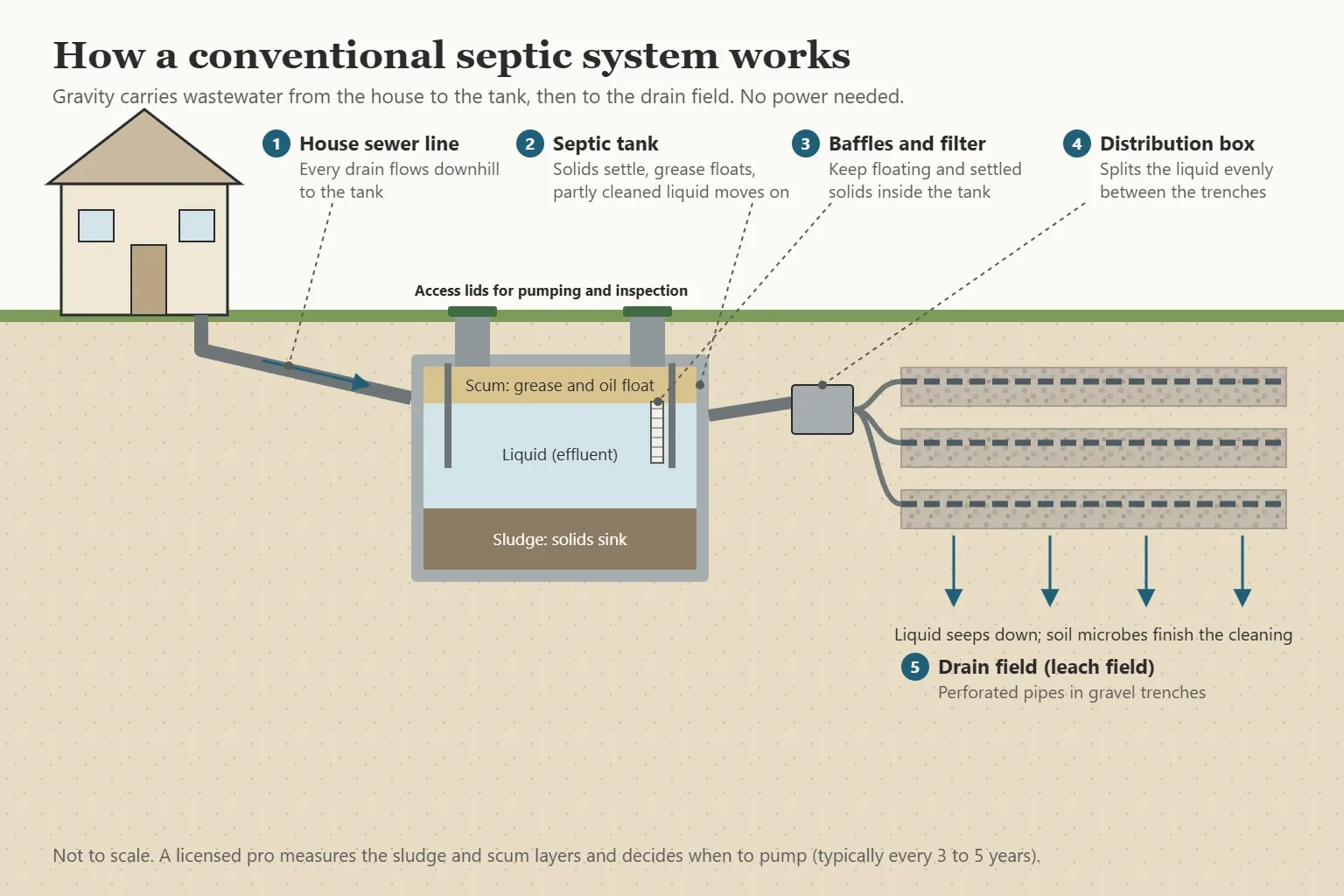
A single flush travels from the toilet into the house sewer line, then into the septic tank. In the tank, solids settle and the liquid moves out through an outlet baffle and filter. From there it flows to the distribution box, then into the drain field (some people call it the leach field).
The whole trip is quiet and mostly out of sight. That’s why problems can feel sudden even when they built up slowly.
Why it is gravity and soil doing the work
A conventional gravity system uses no power. Gravity pulls wastewater downhill, and bacteria and soil do the cleaning.
Picture a jar of muddy water left on the counter. Heavy grit sinks, oil floats, and clearer water sits in the middle. Your tank works the same way, just much bigger.
What does the septic tank do?
The septic tank holds wastewater long enough for solids to settle and grease to float, so only partly cleaned liquid moves on. It’s usually a buried concrete, fiberglass or plastic box.
Sludge, scum and the clear middle layer
The tank sorts waste into three layers:
- Sludge: heavy solids that sink to the bottom.
- Scum: grease, oils and light material that float on top.
- Effluent: the liquid layer in the middle.
Anaerobic bacteria (bacteria that live without oxygen) digest part of the solids. They never finish the job, so sludge slowly builds up. That’s the reason tanks need pumping. A septic professional measures the sludge and scum layers and decides when to pump.
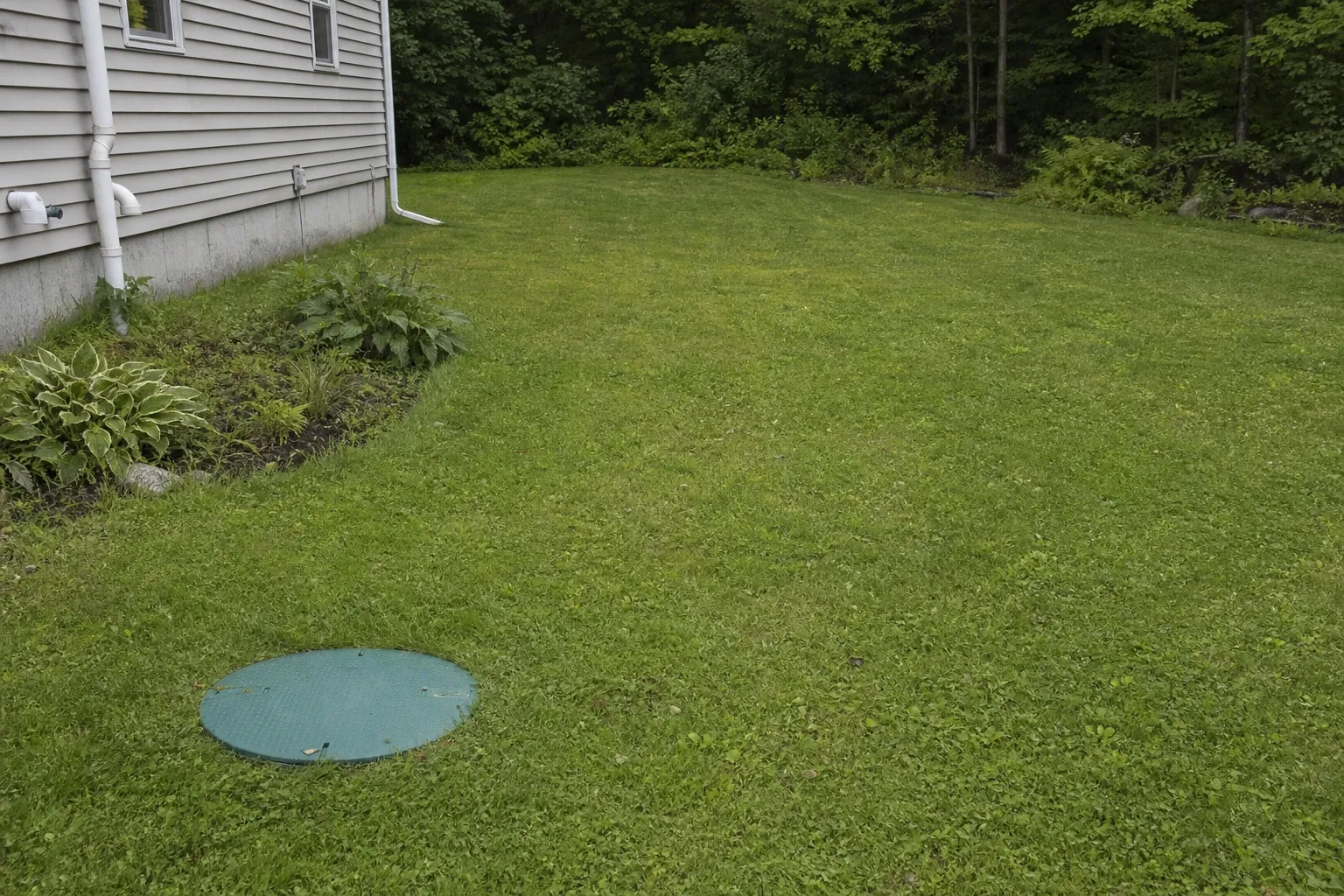
Most tanks have one or two lids at ground level or a little below it. Tank sizes vary by home, so check your records or ask a pro.
What is septic tank effluent?
Septic tank effluent is the partly treated liquid that leaves the tank. It still carries bacteria and nutrients, so it isn’t clean enough to release on its own.
The soil in the drain field does the finishing work. Think of the tank as the first rinse, not the last.
What are baffles and the effluent filter for?
Baffles and the effluent filter keep solids and scum inside the septic tank instead of letting them travel to the drain field.
Inlet and outlet baffles
Baffles are walls or pipe fittings at the tank’s inlet and outlet. The inlet baffle slows incoming wastewater so it doesn’t stir up the layers. The outlet baffle holds back scum and lets only the middle layer leave.
A missing or broken baffle can send solids toward the drain field, where they can do lasting harm. A pro can check baffles during a pumping visit.
Effluent filter maintenance
An effluent filter is a screen near the outlet that traps fine particles. It can clog, which may cause slow drains or a backup into the house.
It needs cleaning now and then, often done by the pro at pumping time. Please don’t pull it yourself. The tank holds hazardous gases and raw wastewater, so leave it to someone with the right gear.
What does the distribution box do?
The distribution box splits effluent evenly among the lines of the drain field. It’s a small box, often concrete, sitting between the tank and the field.
If it shifts or settles, one line can get too much liquid and flood while others stay dry. Not every system has one; some use other ways to split flow, and a pro can tell you what yours has.
The box is often buried and hard to find. A septic pro can locate it and inspect it, and your system map, if you have one, will help.
How does the drain field clean wastewater?
The drain field (leach field) spreads effluent into soil, where microbes and filtration remove most contaminants. It’s the last and most important stage.
Perforated pipes, gravel and soil
Effluent trickles out of pipes with small holes, through gravel and into the soil. Tiny organisms in the soil feed on what’s left, and the soil filters the rest.
The biomat
A biomat is a thin, slimy layer of microbes that forms naturally where effluent meets soil. A thin one helps filter. If too much grease or solid waste reaches it, it thickens and slows how fast the soil can absorb liquid.
Why it must stay dry on top
The field needs air and dry, healthy soil to work. Don’t drive or park on it, and keep tree roots away. Our septic drain field maintenance guide covers care in more detail.
Where do problems usually show up in each part?
Problems show up in the part that’s overloaded or damaged, and the symptom often points to which one. Use this chart as a starting guess, not a diagnosis.
| Symptom | Likeliest part | Call a pro? |
|---|---|---|
| Slow drains in the whole house | Tank full, or clogged effluent filter | Yes, soon |
| Gurgling pipes | Clogged filter, full tank or blocked line | Yes, soon |
| Sewage backing up into drains | Tank, filter or drain field | Yes, right away |
| Rotten-egg smell near the tank | Tank lids, vents or baffles | Yes, for an inspection |
| Soggy or lush patch over the field | Drain field or distribution box | Yes, soon |
| Sewage smell inside the house | Plumbing vents, traps or tank | Yes, see below |
A sewage backup or standing wastewater needs a licensed septic pro right away. Keep people and pets away from wet spots.
Odors and wet spots are signs to get the system inspected. They aren’t something to fix with an additive. If the smell is indoors, see septic tank smell inside the house.
How do you keep every part working between pumpings?
You keep each part working by pumping on schedule, spreading out water use and keeping the wrong things out of the system. The EPA also shares everyday homeowner tips through its SepticSmart program.
- Pump on a schedule set by tank size and household use. EPA says to have your system inspected about every 3 years and pumped typically every 3 to 5 years. Our septic tank maintenance guide shows how to plan it.
- Keep records and a map of the tank, lids, filter, box and field.
- Spread out laundry across the week instead of running many loads back to back.
- Skip wipes, grease and harsh chemicals. Wipes don’t break down, and grease feeds the biomat.
- Protect the drain field from vehicles, roots and extra water.
Some owners add a monthly treatment. Septifix, for example, is an oxygen-releasing tablet with aerobic bacteria; the maker says it supports bacterial activity. The maker hasn’t published independent test results for Septifix, and no tablet replaces pumping or inspection.
If your system uses pumps or aerators instead of plain gravity, see what an aerobic septic system is.
Where do these parts fit in the bigger septic picture?
Knowing the tank, baffles, filter, box and field makes the rest of septic care easier to follow. Each part has a job, and each one depends on the part before it.
For the wider view of care, smells and treatments, head to Septic System Basics. If you’re deciding what to do next, start with septic tank maintenance for a between-pumpings routine.
A good first step this week: find your tank’s lids and any records, and book an inspection if you can’t remember the last pumping.
Common questions
How often should a septic tank be pumped?
It depends on tank size and how many people use the system. Many households pump every three to five years, but your local septic pro can set a schedule. Keep a record of each visit so you can plan the next one.
Do all septic systems have a distribution box?
No. Many gravity systems use one, but other designs split flow with different parts, such as pumps or a single trench. A licensed septic pro can tell you what your system has and where it sits.
Can I see the parts of my septic system myself?
You can usually see the tank lids at ground level, and maybe vent pipes. The baffles, filter, box and drain field are buried or inside the tank. Don’t open lids yourself, because tank gases are hazardous. Ask a pro.