Septic System Basics: Maintenance, Smells and Treatments
A healthy septic system needs four things: pumping about every 3 to 5 years (based on tank size and household use), a protected drain field, careful water use, and keeping harmful items out of the drains. Bacteria or enzyme treatments are optional extras. They can't replace pumping, inspections, or a licensed septic pro when something goes wrong.
Some links on this page are affiliate links: if you buy through them, we may earn a commission at no extra cost to you. Details
Septifix: Monthly flush-in septic tank tablets that the maker says release oxygen and add live aerobic bacteria.
Check Septifix on the official site60-day money-back guarantee
In this guide
- Start here
- How does a septic system work, in plain words?
- What does septic tank maintenance at home involve?
- When should a septic tank be pumped?
- Why does my septic tank smell, and what should I do?
- Which cleaning products are safe for a septic tank?
- Do septic tank treatments and additives work?
- Which septic guide should I read next?
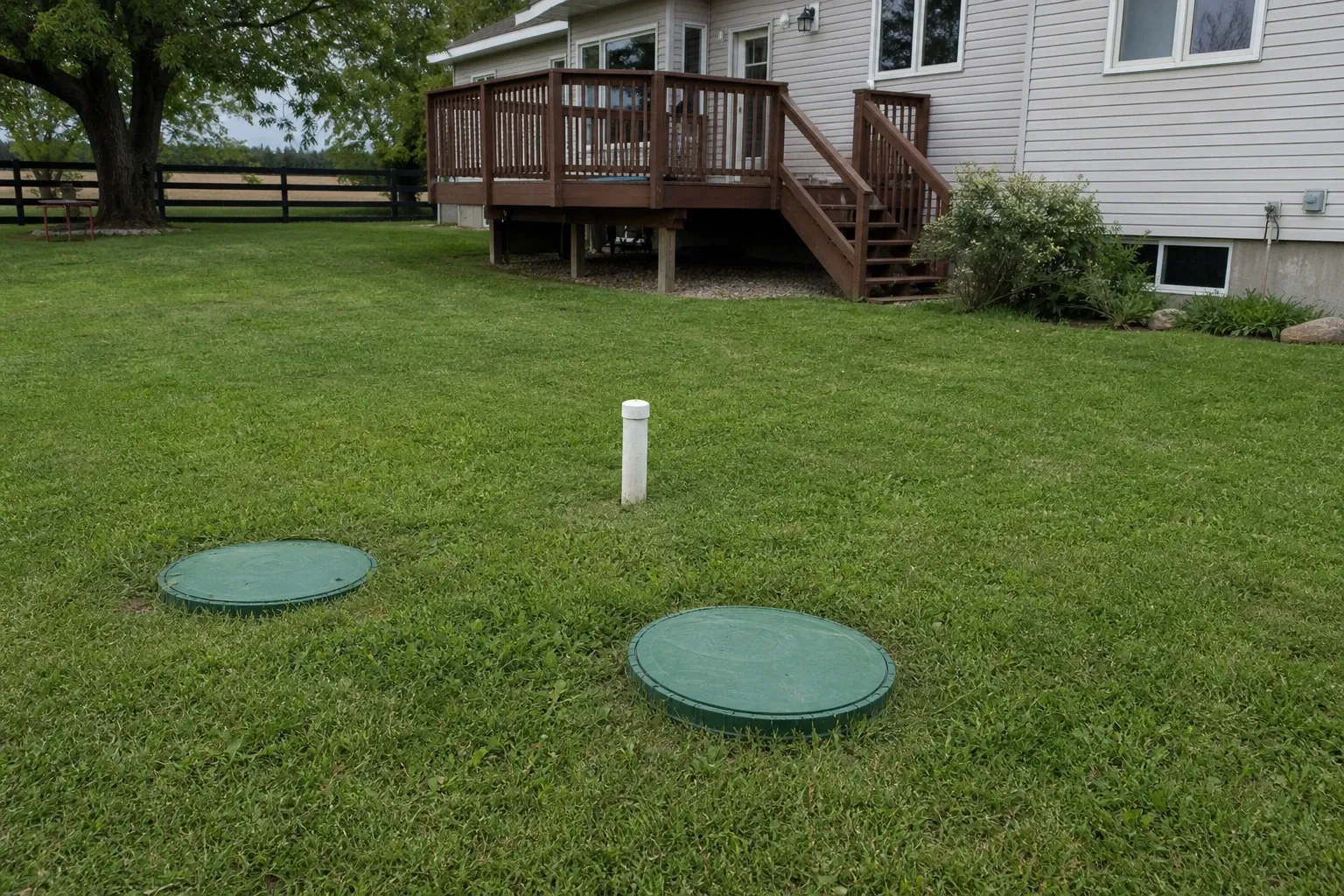
You just bought a house in the country. The listing said “septic,” there’s a lid somewhere in the yard, and nobody told you what you’re supposed to do with it. That’s a very normal place to start.
The short version: pump on schedule, protect the drain field, go easy on water, and keep the wrong things out of the drains. Everything else is detail.
Start here
These guides each tackle one piece of the septic picture in more depth.
- How each part of your system fits together: the tank, baffles, pipes and field, explained one by one.
- What to do between pumpings: simple habits that keep the system running.
- Fixing a septic smell indoors: dry traps, vents and when the odor means trouble.
- How the main treatment types compare: bacteria, enzymes, chemicals and hybrids side by side.
- Our Septifix review: ingredients, cost and who that tablet product suits.
How does a septic system work, in plain words?
A septic system is a buried tank plus a drain field that separates household wastewater, lets bacteria break part of it down, and returns the cleaner water to the soil.
Tank, drain field and the bacteria in between
The septic tank is a watertight box, usually concrete or plastic, that holds wastewater long enough for solids to separate. Clearer water then flows out to the drain field (also called the leach field), a network of pipes in gravel or soil that filters it further.
Natural bacteria living in the tank digest some of the waste. They don’t digest all of it, though, and that’s the key to everything else on this page.
Where sludge and scum come from
Sludge is the heavy layer of solids that sinks to the bottom of the tank, and scum is the floating layer of fats, oils and light material on top. Picture a jar of muddy water left on the counter: grit sinks, bits float, and the middle clears.
That middle layer is what drains away. Since bacteria only break down part of the solids, sludge and scum slowly build up until a pumper removes them.
What does septic tank maintenance at home involve?
Home septic tank maintenance comes down to regular inspections, good records, sensible water use, careful flushing and keeping the drain field protected.
Inspection and record keeping
A septic pro should inspect the system every few years, and many people schedule it with pumping. Keep a simple sketch showing where the tank lid and drain field sit, plus a log of every service date and what was found.
Quick tip: Tape a copy of your map and service log inside a kitchen cabinet. The next pumper, or the next owner, will thank you.
Water use and what not to flush
Too much water at once can push solids out of the tank before they settle. Spread laundry across the week, fix running toilets and dripping faucets, and avoid running the dishwasher and washer together.
Only human waste and toilet paper belong in the toilet. Keep these out of every drain:
- Wipes (even “flushable” ones), paper towels and feminine products
- Cooking grease, fats and oils
- Paint, paint thinner, solvents and motor oil
- Chemical drain cleaners
- Medications, cat litter and coffee grounds
Protecting the drain field
The drain field needs loose, unpacked soil and air to do its job. Keep cars, trucks and heavy equipment off it, don’t build over it, and plant only grass nearby. Trees and shrubs with deep roots can crack or clog the pipes.
When solids or too much water reach the drain field, they clog the soil, and skipped pumping is a common reason they get there.
When should a septic tank be pumped?
Most household septic tanks need pumping every 3 to 5 years, though the right timing depends on tank size, household size and what goes down the drains.
How tank size and household size change the schedule
A small tank serving a big family fills faster than a large tank serving one or two people. Garbage disposals also add solids and shorten the gap. A pumper can measure sludge and scum depth during service and tell you whether to come back sooner or later.
| Situation | Typical pumping pattern |
|---|---|
| Standard tank, average household | About every 3 to 5 years |
| Small tank or large household | Toward the shorter end, sometimes sooner |
| Garbage disposal in heavy use | Often sooner than average |
| Holding tank (no drain field) | Whenever it fills |
Pumping a household tank commonly costs a few hundred dollars, with prices varying by region, tank size and how easy the lid is to reach.
Holding tanks are different
A holding tank has no drain field, so every drop that goes in stays there until it’s pumped. How often depends entirely on how much water you use. Many have an alarm that sounds when the tank nears full.
Can a tank really go 20 years without pumping?
Some tanks go decades without pumping, but usually because nobody checked, not because it was fine. Over those years solids can drift into the drain field and clog the soil, and fixing or replacing a field costs far more than routine pumping. Some systems have different needs, so check your local health department’s rules.
Why does my septic tank smell, and what should I do?
A septic smell usually comes from a dry drain trap, a blocked vent, a full tank or a struggling drain field, and some of those need a professional.

Common causes of odor
The rotten-egg smell comes from a gas called hydrogen sulfide. Inside the house, the usual culprit is a dry trap in a rarely used sink or floor drain; pouring in a cup of water often solves it. A plumbing vent blocked by leaves, snow or a nest can also send odors back indoors.
Outside, a mild smell near the tank lid can be normal. A stronger smell, or one near the drain field, can mean a full tank or a field that isn’t absorbing water. Our guide to a septic smell inside the house walks through each cause.
When a smell means call a professional
Call a licensed septic professional if a sewage smell comes with any of these:
- Slow drains in several fixtures
- Gurgling sounds in pipes
- Soggy ground, standing water or bright green grass over the drain field
- Sewage backing up into tubs or floor drains
Those are signs of a physical problem. A product poured down the toilet can’t fix them.
Which cleaning products are safe for a septic tank?
Most ordinary household cleaners are fine for a septic tank in normal amounts; the trouble starts with harsh chemicals and heavy, repeated use.
Vinegar and baking soda
Yes, you can pour vinegar in a septic system. Small amounts of vinegar and baking soda used for cleaning won’t hurt the tank. There’s no need to pour in large doses as a “treatment,” though, since they don’t add anything the system needs.
Dawn and other dish soaps
Dawn and other regular dish soaps are generally fine at normal kitchen amounts. Problems come from piling on any soap, heavy use of antibacterial products, or daily heavy bleach use, which can harm the helpful bacteria in the tank.
Bleach, drain cleaners and disinfectants
A splash of bleach in a load of laundry is usually fine, but frequent heavy use is not. Skip chemical drain cleaners entirely, along with solvents, paint thinners and oils. For a slow drain, try a plunger or drain snake first.
Do septic tank treatments and additives work?
Septic tank treatments are optional products marketed to support the tank’s natural breakdown of waste, but they don’t replace pumping, inspections or drain field care.
Bacteria, enzymes and oxygen-releasing tablets
Most treatments use bacteria, enzymes, or both. Enzymes are proteins that help break down materials like grease and paper, while bacteria do the actual digesting. Hybrid formulas mix the two. Product makers say these help boost the natural bacteria in the tank and reduce clogs, backups and odor. Big brands such as Rid-X sit alongside many smaller ones. A few natural formulas are also sold as safe to use in RVs and boats, so check the label if you have an RV or boat toilet.
Chemical treatments are a separate group. Some contain lye or solvents and are aimed at clearing clogs, not routine care, and harsh chemicals can damage the bacteria a septic tank relies on.
Oxygen-releasing tablets are another option. Septifix is one example: a monthly tablet you flush down the toilet. The maker says it contains live aerobic bacteria plus an oxygen-releasing compound that helps break down sludge and reduce smells. The maker hasn’t published independent test results for Septifix.
Forms and dosing: liquid, powder, gel, tablet, packet
Treatments come as liquid, powder, gel, tablets and pre-measured packets or pods. Packets and tablets are the easiest, since there’s nothing to measure. Whatever the form, know your tank size and check that the product is dosed for it; one pod pack, for example, is made for monthly use in a 1,000-gallon tank.
Treatments and your pumping schedule
Some makers say their products mean you can pump less often, and those are their claims. Keep your pumping schedule no matter what you add.
Treatment cost versus pumping cost
Add up a year of product and set it beside a pump-out. Septifix, for example, lists $69 for a 6 month supply (plus shipping), $118 for 12 months and $147 for 18 months, with a 60-day refund policy, according to the maker. Pumping still runs a few hundred dollars every few years on top of that. A treatment is extra spending, not a swap.
If you’d like to try a monthly tablet alongside regular pumping, see the current Septifix pricing and refund terms on the official site. We may earn a commission if you buy through that link, at no extra cost to you.
Check Septifix on the official site60-day money-back guarantee
Which septic guide should I read next?
The best next guide depends on your problem: smells, pumping timing, treatments, or a specific product.
- Smell in or around the house: start with the smell guide.
- Not sure when you last pumped: call a pumper, then follow the maintenance guide.
- Curious about additives: read the treatment comparison.
- Weighing Septifix in particular: read the full review first.
One plain note on limits. No treatment can fix a failed drain field, clear a sewage backup, or stand in for a pump-out. If water is pooling in the yard or sewage is coming back up, stop using the drains as much as you can and call a licensed septic professional today.
Every guide on this site
Septic Basics
Treatments Compared
- Septic Tank Treatments Compared
- Septic Tank Tablets
- Septic Tank Enzymes
- Septic Tank Additives
- Septic Tank Treatment Pods
- Septic Tank Sludge Dissolvers
- Natural Septic Tank Treatments
- Rid-X vs Green Gobbler vs Septifix
- Roebic K-37 vs Septifix
- Do Septic Tank Treatments Work?
- Baking Soda and Vinegar in Septic Tanks
- Septifix Review
Maintenance
Septic Bacteria
Septic Smells
Common questions
Do septic treatments work in cesspools?
A cesspool is an older pit that lets wastewater soak straight into the ground, without a separate drain field. Some treatment makers say their products can be used in cesspools, so check the label. Cesspools often need more frequent pumping, and many areas restrict them, so have a septic pro check yours.
Can I use septic treatments with an RV or boat toilet?
Some septic treatments are labeled for RV and boat holding tanks, while others are made only for home septic tanks. Read the product label for its stated uses. RV and marine tanks are small and emptied often, so follow the dosing for that tank size and dump at approved stations.
Do I need to add bacteria to a new septic tank?
A new septic tank gets its bacteria naturally from normal household waste within regular use, so adding bacteria is optional. Some treatment makers suggest a starter dose for new or freshly pumped tanks. Either way, normal use and keeping harsh chemicals out of the drains matter most.
How much does it cost to pump a septic tank?
Pumping a household septic tank commonly costs a few hundred dollars. The price depends on your region, tank size, how hard the lid is to reach, and whether digging is needed. Ask whether an inspection is included, and keep the receipt with your service records for future reference.
Are septic treatments safe for the drain field?
Bacteria and enzyme treatments are generally sold as safe for septic systems, which is the maker’s claim. Chemical products containing lye or strong solvents are a different matter and can harm the tank’s bacteria. No treatment protects a drain field from heavy vehicles, tree roots or skipped pumping.
How do I find my septic tank?
Check your property records or the county health department, which often keep permits showing tank location. You can also follow the main sewer pipe out from the house; the tank usually sits 10 to 25 feet away. A septic pro can locate it with a probe or a locating tool.